28
Aug
24
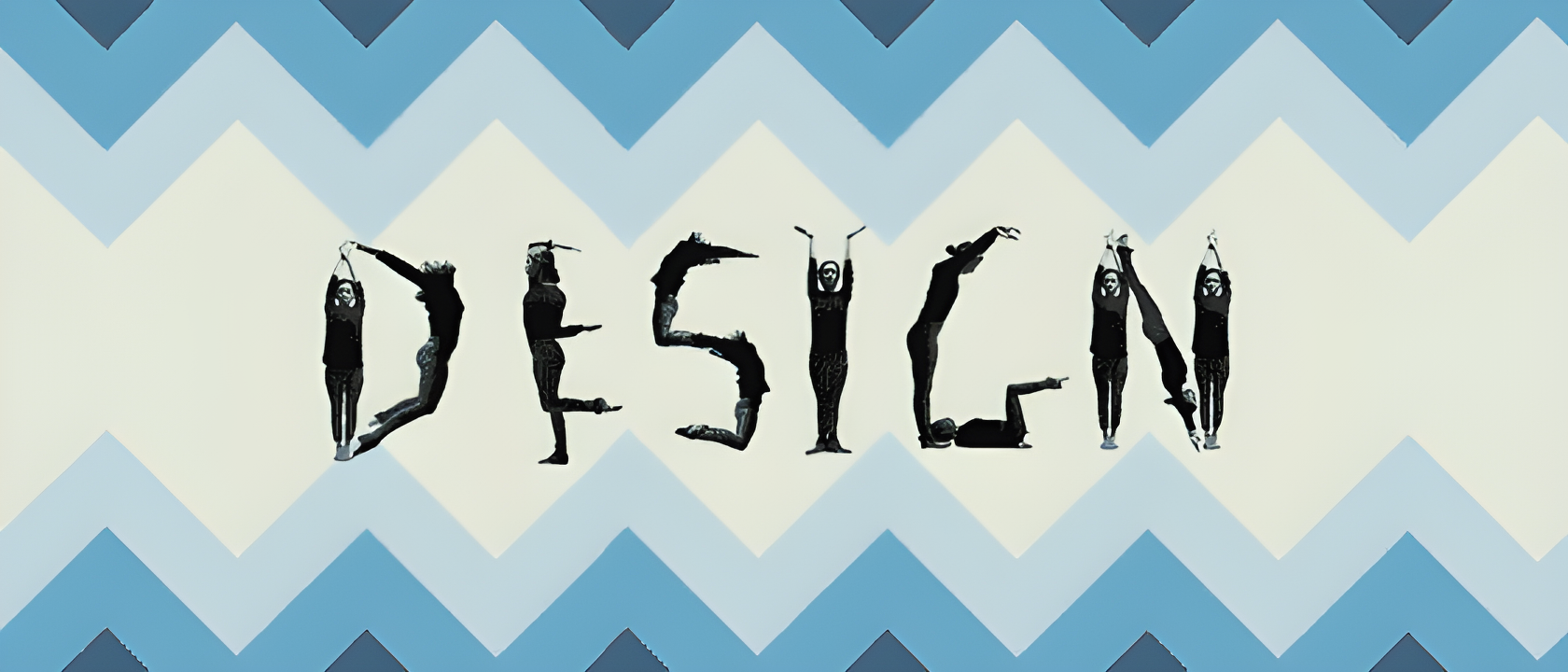
At first glance, dance and design might seem to exist on entirely different stages — one physical, one visual. But both are rooted in the same principle: creating movement that communicates emotion. A dancer uses the body to tell stories, while a designer uses form, space, and texture. Yet both are performers in their own right — one moves through air, the other through the mind.
Designers often underestimate how much of their work involves choreography. Every layout, line, and proportion directs the viewer’s gaze like a dancer’s gesture guides an audience. When done right, it flows. When it fails, it stumbles. In both arts, rhythm and timing make the difference between chaos and beauty.
Design and dance speak a visual language — both rely on composition, proportion, and harmony to translate an abstract idea into an experience. In design, balance comes through alignment, scale, and negative space. In dance, it’s through body control, timing, and emotional rhythm. Neither can survive without structure. And yet, both thrive on improvisation.
I remember working on an interior concept once — the brief demanded “energy without chaos.” It reminded me of choreography. Every element had to move in relation to another, reacting, supporting, or leading. A well-designed space, like a well-executed dance, gives the illusion of effortlessness — but only because every detail was intensely rehearsed behind the scenes.
If dance has eight counts, design has its own rhythm — a pulse of color, weight, and repetition that holds the viewer’s attention. Designers, like dancers, rely on rhythm to maintain flow. The repetition of shapes, the pauses between visual beats — that’s the choreography of perception.
The best designs, like the best dances, breathe — they contract and release, they play with tension and silence.
Composition is where both arts truly converge. Both rely on asymmetry to spark energy and symmetry to calm it. Both know when to break patterns to make a statement. Whether on canvas or stage, rhythm is what turns technique into art.
A dancer performs for an audience they can see — designers perform for one they can only imagine. But the principle is identical: you create something that needs to move people. Both wait for a reaction — applause or engagement, silence or confusion — because that feedback defines whether the message was understood.
I’ve seen designers obsess over client presentations the same way dancers do before a show. There’s the same mix of nerves and excitement. You tweak, polish, repeat, hoping it lands right. And when it does, that silent moment of connection — between viewer and creation — feels almost theatrical.
There’s something deeply vulnerable about both crafts. You put a part of yourself into something ephemeral — a dance ends the moment it begins, and a design is often reinterpreted, remodeled, or forgotten. Yet both matter precisely because they exist in the now. They demand presence.
To design like a dancer is to embrace impermanence — to understand that creativity isn’t about control, but about flow. A dancer doesn’t overthink each movement; they trust instinct, rhythm, and emotion. Maybe designers could use a bit more of that — less fear of imperfection, more faith in motion.
In an age when digital tools can render perfection in seconds, design risks losing its sense of movement — that pulse of humanity that makes something feel alive. Dance reminds us that form must move, breathe, and evolve. The best interfaces, the most memorable spaces, the most intuitive products — they all carry that same sense of rhythm.
Designers may never pirouette in the studio, but they can choreograph experiences that make people feel something real. That’s the point where dance and design meet — not in shape or technique, but in emotion. Because whether it’s a stage or a sketch, both are ultimately about one thing: motion that means something.