29
Jun
26
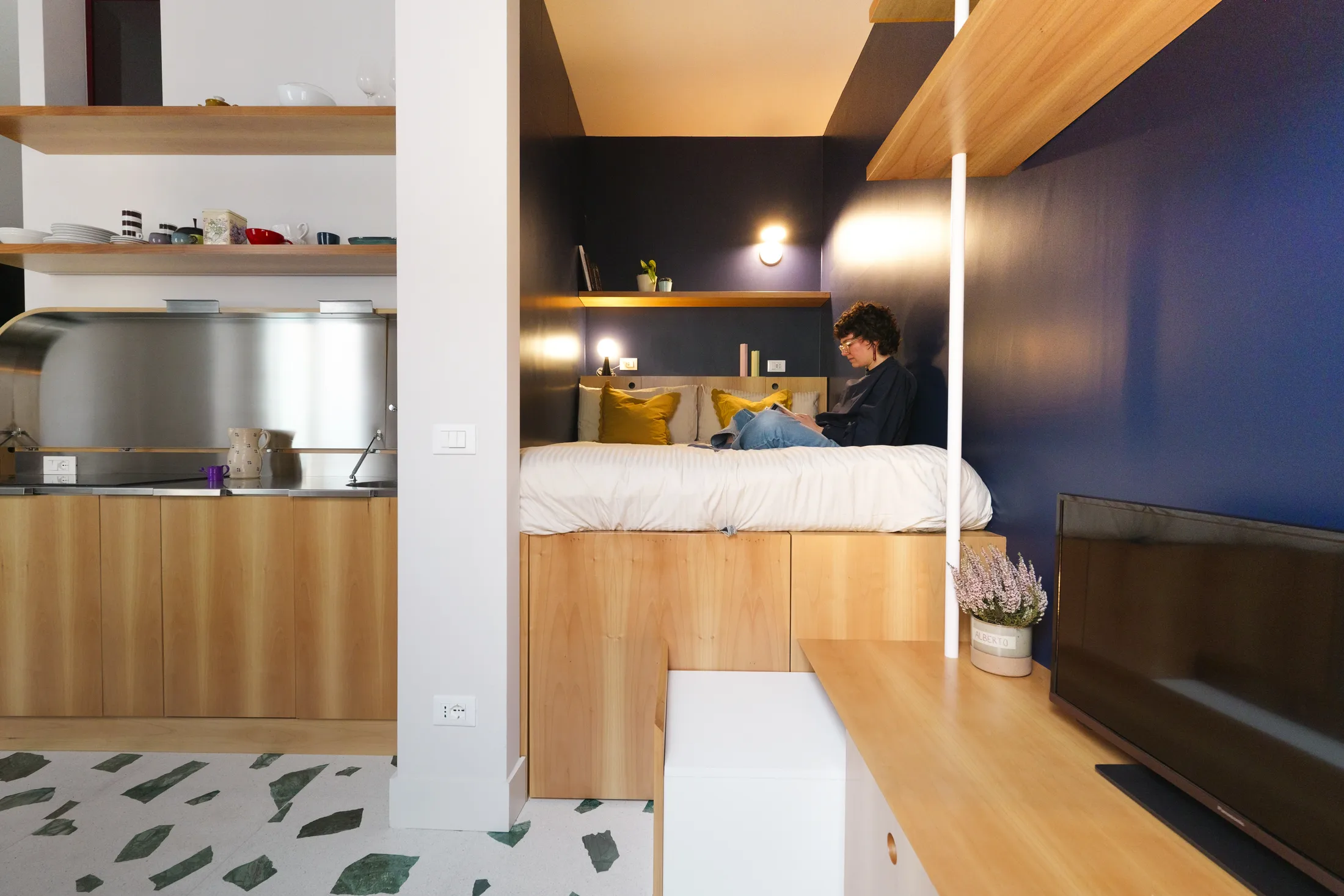
We live in an incredibly visual culture where we judge interior design by how expansive, airy, and hyper-luxurious it looks on a high-definition screen. When people browse through architecture platforms or home styling feeds, they are completely blinded by massive kitchen islands, sprawling marble countertops, and open-plan dining zones. But as a designer who has spent years evaluating how people actually survive in dense global design capitals, I am constantly frustrated by how willfully we ignore the brutal physical reality of micro-housing. In hyper-dense hubs, human beings are increasingly occupying tiny studio micro-apartments, occasionally measuring under 10 square meters total. Yet, the vast majority of appliance and cabinet manufacturers still build for massive suburban layouts, treating compact urban footprints with absolute contempt.
Think about the classic configuration of a sub-10-square-meter room. The very moment you install a fixed counter, a standard sink, and a permanent two-burner stovetop, your entire living environment is immediately strangled. The smell of cooking oil permanently clings to your bed sheets, the sharp corners of the countertops constantly clip your hips as you walk by, and your home feels less like an inviting sanctuary and more like a cramped commercial dishwashing station. For millions of young urban professionals and student renters, this continuous physical confinement is not a simple visual annoyance; it is a profound psychological drain that induces subtle claustrophobia and persistent mental fatigue. The traditional cabinetry industry has fundamentally failed modern urban renters by failing to realize that permanent, single-purpose cooking zones destroy the livability of small spaces.
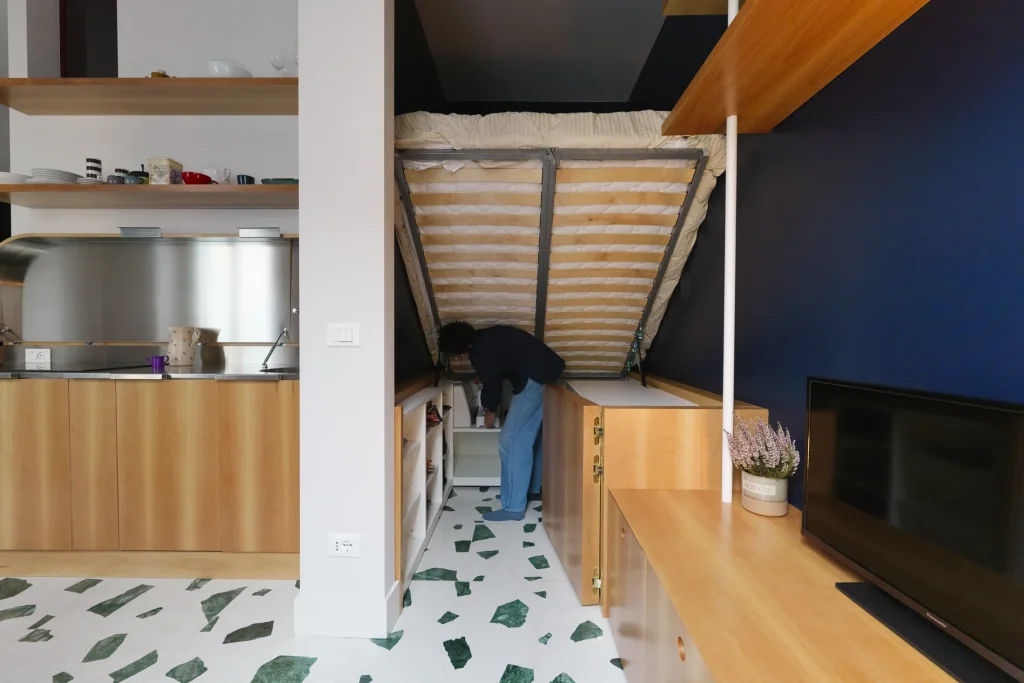
Thankfully, a brilliant and deeply pragmatic perspective is emerging directly from the next generation of Italian industrial design talent. A forward-thinking Milan-based manufacturing startup has recently launched a revolutionary modular kitchen system engineered specifically to conquer the unforgiving boundaries of micro-apartments under 10 square meters. This is not some highly conceptual runway installation built to look avant-garde in a gallery; it is a beautifully engineered, practical system that allows a resident to fully deploy a high-functioning kitchen during meal prep and then fold the entire infrastructure completely flat behind custom wardrobe doors when not in use. What makes this modular project so deeply impressive to me as a creator is the sheer level of mechanical precision applied to the folding pathways.
The designers did not just hide cheap hot plates inside a standard cupboard. The system integrates a flush-folding induction cooktop, a specialized pop-up faucet, sliding workspace panels, and concealed compact ventilation tracks into a unified multi-functional framework. While writing my deep-dive assessment of this mechanical setup, I wanted to ensure my copy targets the precise technical audience looking for space-saving layouts. I passed the manuscript through a digital Keyword Density & Content Semantic Analyzer. Running this software allowed me to carefully evaluate my keyword frequency, study the distribution of spatial engineering n-grams, and optimize the overall semantic structure to improve my technical writing relevance. The data confirmed a vital design fact: by condensing the structural plumbing and electrical footprint into a single folding structural plane, the system frees up massive square footage for daytime living functions.
Historically, whenever custom cabinet companies tried to tackle the compact kitchen market, they stumbled into a massive aesthetic and structural trap. They created small, fixed kitchenette units painted in loud, bright colors and filled with cheap plastic hinges and cluttered external handles. This clumsy approach completely ignores the psychological reality of small-space living, where visual clutter directly triggers intense sensory overload and cognitive fatigue. True spatial optimization requires a completely opposite design philosophy: it demands entirely flat exterior panels, hidden flush hardware, and clean lines that allow the eye to glide across surfaces without friction.
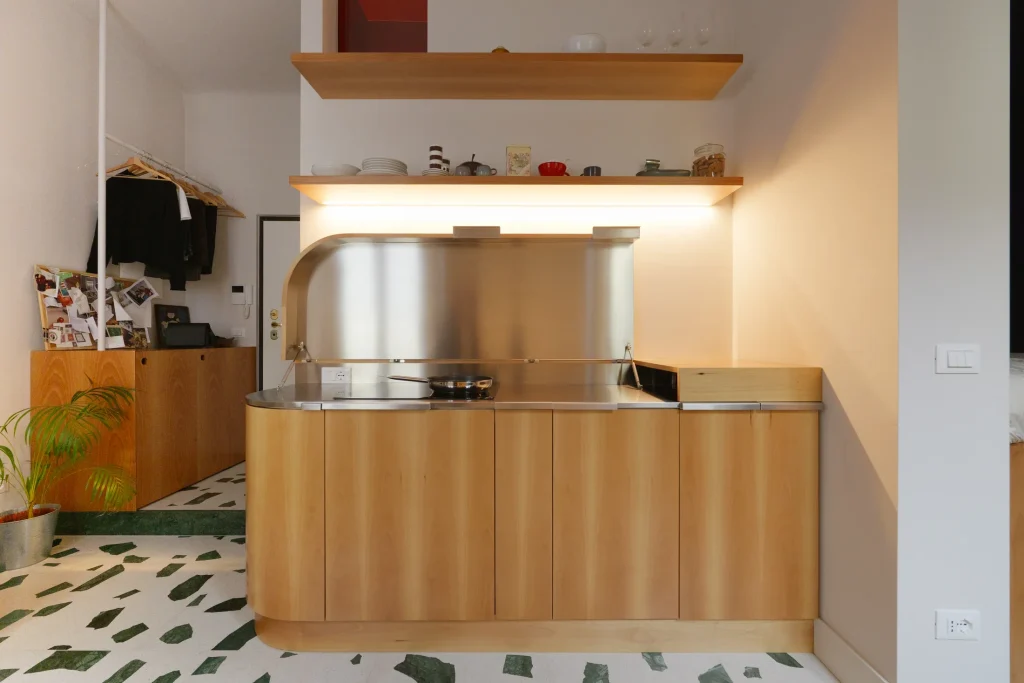
The true genius of this Milanese startup lies in its unwavering commitment to the philosophy of architectural invisibility. When the kitchen is closed, the exterior panels look entirely like an elegant, minimalist wood or matte wardrobe wall that blends seamlessly into the background of the apartment. By matching the texture of the kitchen enclosure to the room’s primary walls, the furniture tricks the human nervous system into perceiving a tiny studio as significantly more open, quiet, and unconfined. It provides an essential sense of visual peace, allowing a single room to shift fluidly from a functional cooking space to a calm, professional home office or a relaxing bedroom without any messy physical reminders of the previous activity.
I learned a harsh, permanent lesson about the absolute folly of choosing prestigious, delicate materials over adaptive structural engineering during a project early in my career helping a creative agency renovate a narrow live-work studio in London. The client was absolutely obsessed with achieving a high-end, classic Italian look. They insisted on installing a solid, thick countertop made from premium polished Carrara marble inside a tiny, non-ventilated corner kitchenette. On paper and in our digital portfolio photography, it looked like an absolute masterpiece of classic luxury contrast against the raw brick walls.
When you force a highly porous, high-maintenance natural material into a high-friction micro-apartment workspace, you are actively setting up the user for a structural nightmare.
The apartment was leased out, and within less than a month, our beautiful luxury concept turned into an absolute disaster of physical degradation. Because the tiny kitchen lacked expansive preparation space, the tenant had to chop ingredients, rest hot pots, and wash dishes on the exact same small slab of stone. Within weeks, accidental splashes of acidic lemon juice and dark coffee created deep, unfixable etched stains across the glossy surface, while the high humidity caused the marble to absorb moisture and develop faint, cloudy discoloration deep within the stone matrix. It looked ruined and unhygienic despite constant scrubbing. We had to tear out the expensive custom slab and replace it with a durable, non-porous engineered quartz surface. It was a deeply humbling reminder that if a material cannot handle the intense physical friction of daily life, its visual prestige is completely worthless.
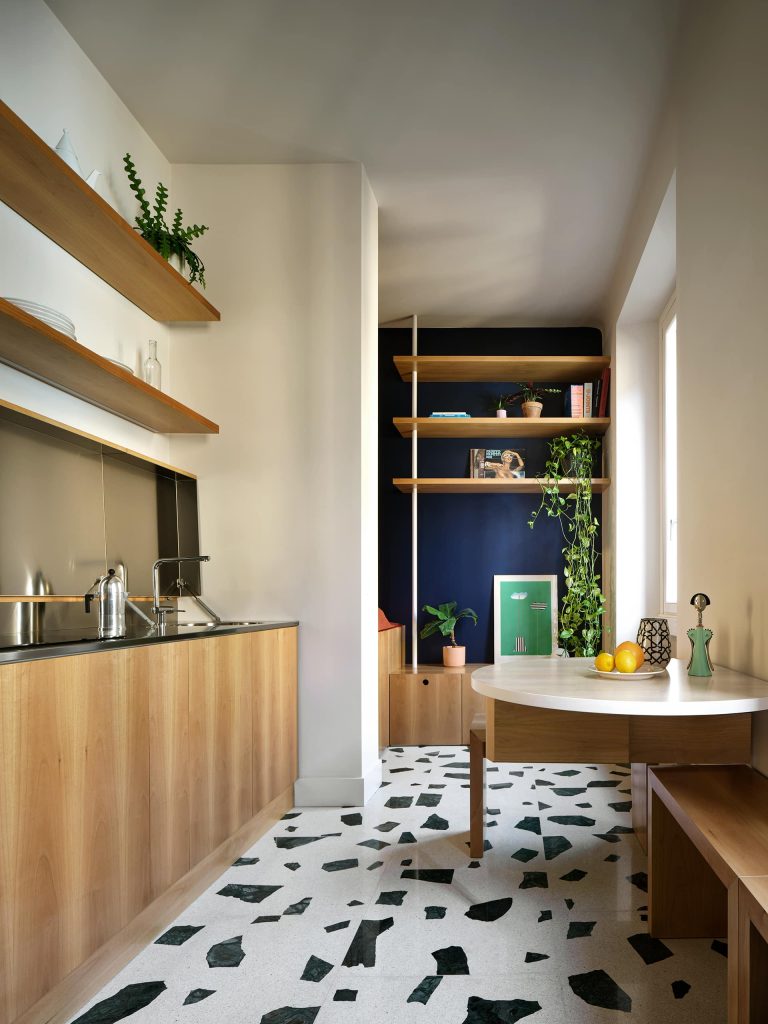
The successful launch of this foldable modular kitchen line from Milan should serve as a massive wake-up call for product developers, interior architects, and furniture manufacturers across the global creative industry. We must actively break away from our outdated obsession with building bulky, stationary, single-purpose home installations. We need to start realizing that as our global cities become increasingly dense, expensive, and compact, our physical possessions must become infinitely more responsive, lightweight, and fluid. A kitchen should never dictate or restrict how a human moves through their limited private sanctuary; it should adapt to their schedule.
As creators, our ultimate goal should be to eliminate the unnecessary physical and visual friction of micro-living, providing a deep sense of order, spatial liberation, and emotional calm through intelligent spatial ergonomics. We need more flexible systems that challenge the lazy, automated standards of mass-produced residential cabinetry. Let us stop installing overwhelming, fixed counters that trap renters in cramped layouts. Instead, let us start engineering elegant, human-centric living components that genuinely embrace, protect, and respect the small spaces we call home.