29
Jun
26
We live in an incredibly visual culture where we judge public hospitality environments by how clean, balanced, and aesthetically unburdened they appear from the front door. When operators build out new inner-city espresso bars or neighborhood bistros, they spend a massive chunk of their capital on premium specialty espresso machines, handmade ceramic tile work, and custom-sculpted menu boards. But as a designer who constantly looks at how humans interact with everyday commercial infrastructure, I am deeply exhausted by the absolute lack of logistical empathy found in standard layouts. The modern café has effectively been taken hostage by the struggle for electrical power. We design beautiful, minimalist seating zones only to watch them get immediately ruined by a chaotic web of long charging cables, bulky wall adapters, and industrial extension cords snaking across the floor tiles.
Think about the typical small-footprint urban café. The moment a couple of remote professionals or travelers sit down to catch up on work, they start scanning the baseboards like hawks looking for a single open wall socket. The two tables right next to the brick wall become permanently jammed with laptop users, while the beautiful, free-standing center tables remain completely abandoned because they lack power access. For hospitality owners, this uneven spatial distribution is not just an eyesore; it is an absolute financial leak that kills table turnover rates and limits seating efficiency. The contract furniture industry has fundamentally failed small-scale business owners by continuing to build inert, single-purpose wooden slabs that completely ignore the device-heavy reality of modern human life.
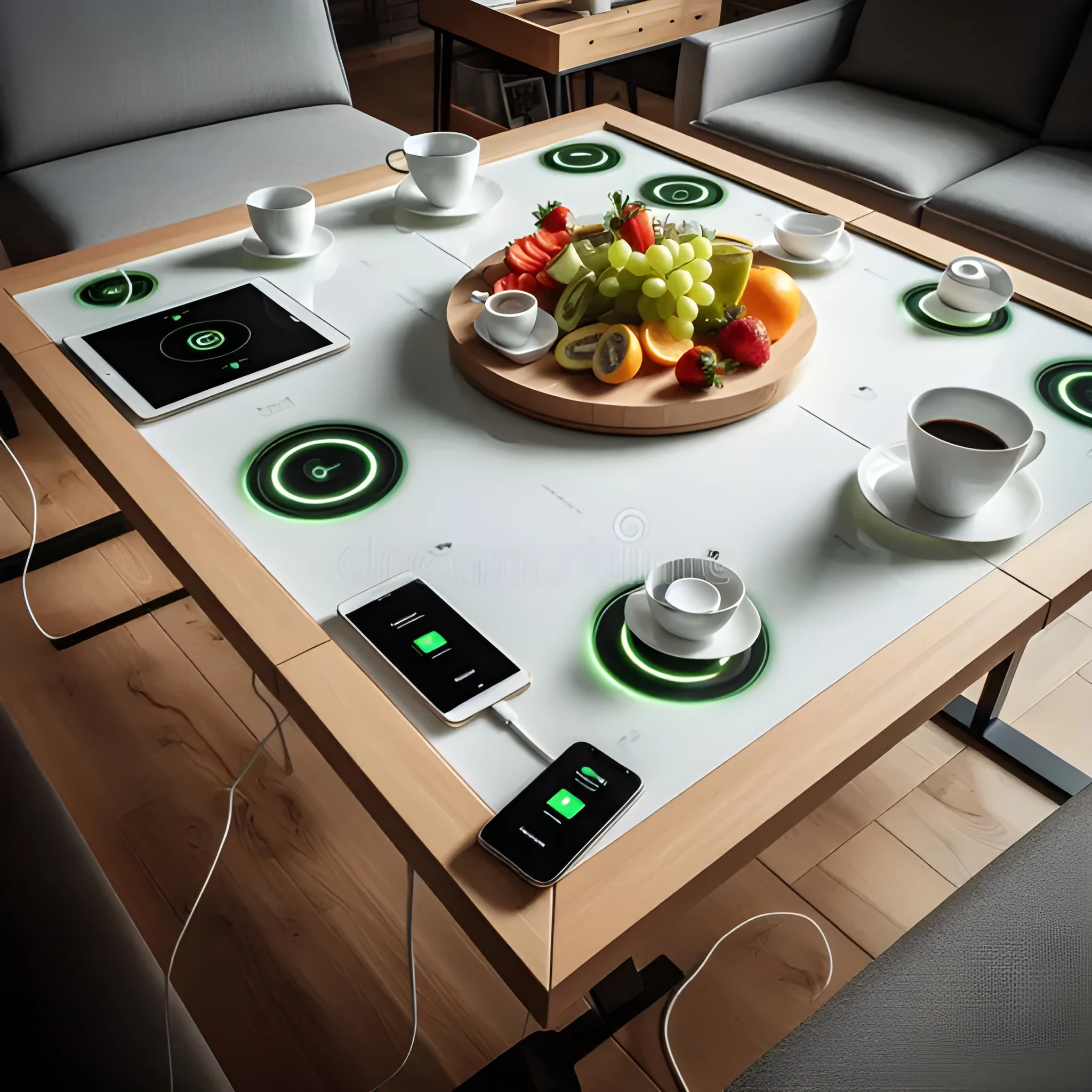
Thankfully, a brilliant, tech-forward alternative is making its way out of the industrial design workshops of Catalonia. A progressive Barcelona-based furniture manufacturer has recently released an exceptional series of cafeteria tables engineered specifically to eliminate power anxiety in high-density, small-footprint environments. This collection features clean, architectural cafe tables that hide two independent, high-speed wireless charging pads and dual USB power arrays directly within the thickness of the tabletop itself—all without expanding the physical dimensions of the furniture by a single millimeter. What makes this launch incredibly elegant to me as a creator is how it hides its mechanical nature entirely behind traditional craftsmanship.
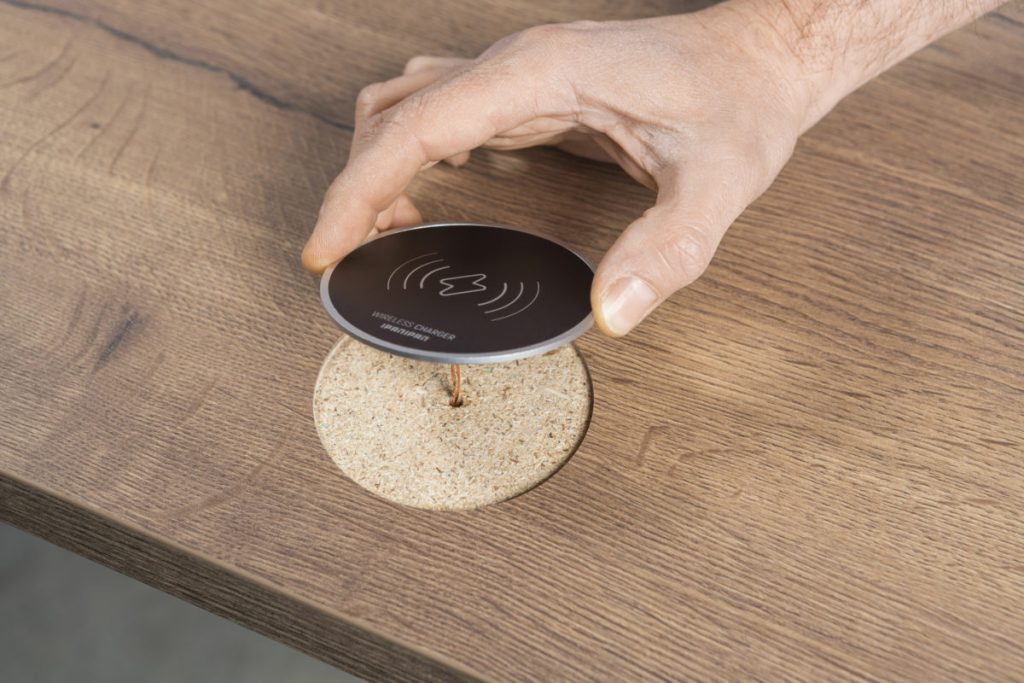
The designers did not just drill messy, aftermarket holes into existing furniture or screw cheap plastic charging bricks to the undercarriage. They routed out precision cavities from the underside of sustainable timbers, placing twin induction coils just fractions of a millimeter below the sealed top veneer. While preparing the digital documentation for this product review to ensure it would reach independent cafe owners and commercial interior buyers, I realized the data needed a highly organized architecture. I ran my web layouts through a specialized SEO Tags Generator tool. Utilizing this engine allowed me to quickly compile clean meta descriptions, map precise keyword structures, and refine the open-graph schemas for maximum visibility across search systems. What this underlying engineering structure highlights is a massive shift: by turning the table surface into a power transmitter, you remove the need for bulky external power columns entirely.
Historically, whenever commercial manufacturers attempted to bring power to free-standing tables, they created massive, industrial nightmares. They built heavy metal tables with massive, thick central pedestals that had to be bolted permanently into the concrete subfloor to hide thick conduits. These setups look incredibly hostile, cost a fortune to install, and lock the cafe into a rigid, permanent floor plan that cannot be altered for weekend private events or seasonal shifts. True technological integration requires a completely opposite path: it demands lightweight, low-voltage power distribution networks, modular components, and hidden connections that preserve the classic warmth of hospitality design.
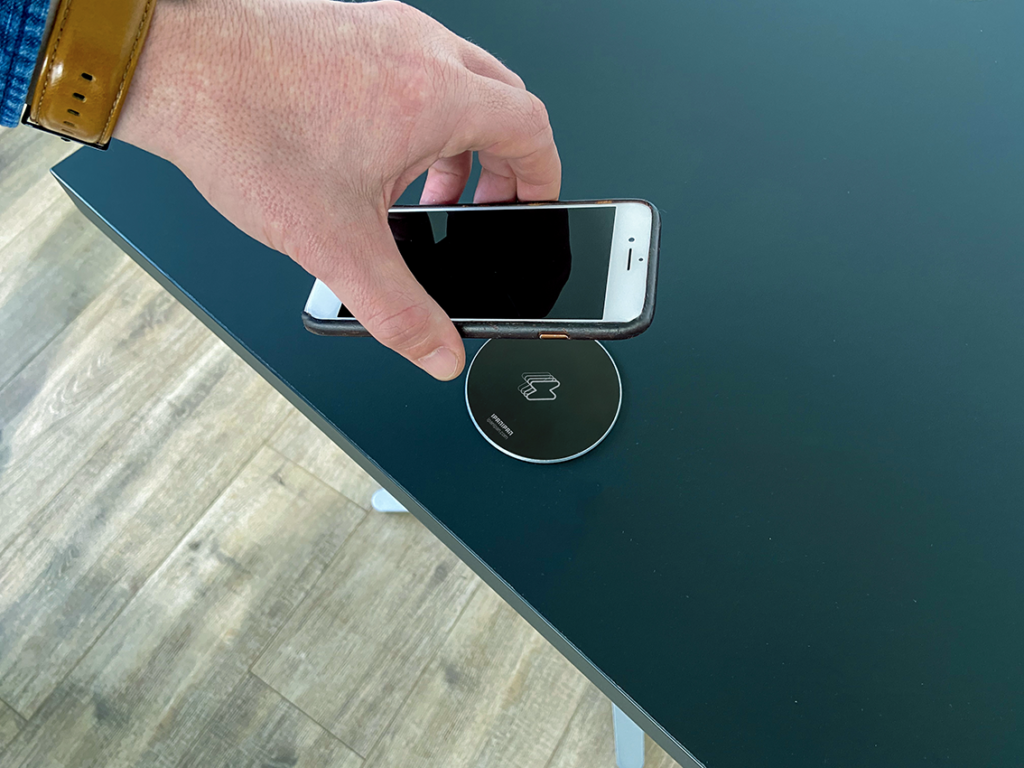
The true brilliance of this new Barcelona furniture line lies in its use of daisy-chained, low-voltage 24V DC tracks that run invisibly beneath a line of banquette seating or through slim, flexible cord sleeves that mimic natural table legs. The top surface features a subtle, laser-etched geometric ring that clearly tells the guest exactly where to rest their smartphone or tablet to initiate the power transfer. There are no flashing neon lights, no loud mechanical clicks, and no ugly plastic components to disrupt the visual peace of the room. It is quiet, human-centric electrical engineering that respects the user’s intelligence while giving small business owners the absolute freedom to reorganize their seating layout whenever they please.
I learned a permanent lesson about the absolute necessity of aligning material thickness with electromagnetic physics during my third year collaborating with a hospitality branding group on a high-end juice bar launch in Miami. The creative lead was absolutely determined to create a series of hyper-glossy, liquid-smooth terrazzo tables that featured embedded wireless charging pads. They instructed the fabrication shop to cast standard Qi-charging pucks directly inside a thick, two-inch layer of high-density clear acrylic resin to ensure the tech was completely waterproofed against accidental spills.
When you place visual depth and heavy liquid proofing ahead of the hard physical limits of wireless energy transfer, your smart tech transforms into a useless piece of buried plastic.
The tables were shipped to the site, polished to a mirror shine, and hooked up to the power grid right before opening day. It was an absolute disaster. The fabrication team had placed the induction coils way too deep within the acrylic pour, creating a thick, structural barrier that completely blocked the magnetic fields from reaching the smartphones placed on top. Devices would rapidly connect and disconnect every few seconds, generating massive amounts of localized thermal heat that threatened to warp the phone batteries without actually transferring a single percentage point of charge. We had to scrap the entire custom order and remanufacture the tables with precision micro-milled cavities from underneath. It was a deeply humbling reminder that no matter how beautiful your protective shell looks, it must always obey the uncompromising rules of physics.
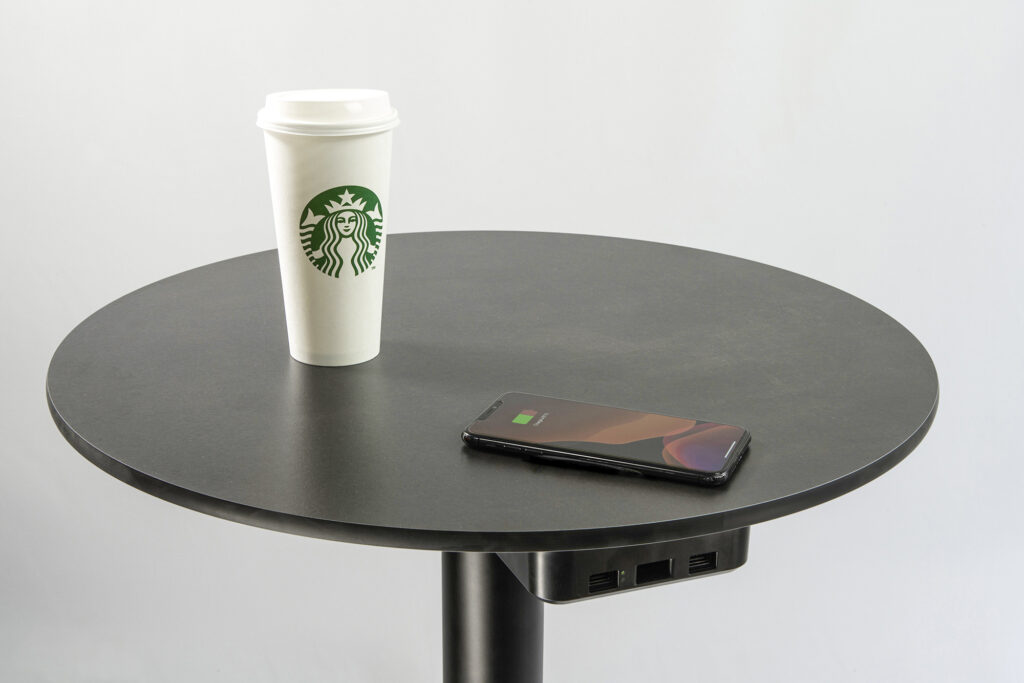
The successful deployment of these built-in power tables out of Spain should serve as a massive structural wake-up call for product developers, commercial interior designers, and hotel procurement managers everywhere. We must actively break away from our outdated habit of treating technology integration as an aftermarket afterthought that can just be bolted onto an object later with plastic clips. We need to start realizing that as our urban spaces become tighter, more expensive, and infinitely more multi-functional, our everyday furniture must step up to act as a responsive helper for our digital lives. A table should no longer just be a dumb, passive surface to hold a coffee cup; it should actively sustain the tools we use to connect with the world.
As creators, our ultimate objective should be to remove the ugly visual and physical clutter of the modern tech landscape, providing a deep sense of order, quiet comfort, and functional freedom through careful, hidden engineering. We need more industrial components that challenge the lazy, unchanging templates of traditional furniture production. Let us stop running messy extension cables across our floors and mounting clunky power tracks to our walls. Instead, let us start engineering elegant, deeply integrated commercial fixtures that genuinely protect, respect, and support the daily habits of the human beings who fill our urban spaces.