23
Jun
26
We live in an incredibly visual culture where we judge progressive municipal planning almost entirely by how clean, vibrant, and artistic it looks on a high-definition screen. When city planners show off their latest green mobility initiatives or sustainable transit maps, they point proudly to wide asphalt lanes and colorful painted pavement markings. But as a designer who constantly looks at how humans interact with physical urban elements, I am deeply exhausted by the absolute lack of protective empathy embedded in standard public fixtures. The modern city development model treats bicycle storage with aggressive structural neglect. We expect thousands of daily commuters to invest their own money into clean transport options, only to leave their vehicles exposed to pouring rain, freezing winters, and intense summer sun on primitive iron bars bolted to open sidewalks.
Think about the classic neighborhood transit station. The very moment a storm front rolls through the city, every single unprotected bicycle rack turns into a sad monument of rust and accelerated decay. Leather seats get completely soaked with water, expensive electronic gear consoles short-circuit from continuous moisture, and chains lose their lubrication within days. For millions of daily riders, this lack of basic shelter is not a minor irritation; it is a direct financial drain that actively discourages long-term reliance on clean transit alternatives. The traditional construction sector has fundamentally failed modern urban commuters by continuing to treat micro-mobility parking as a cheap, open-air afterthought that refuses to offer real-world shelter from volatile weather conditions.
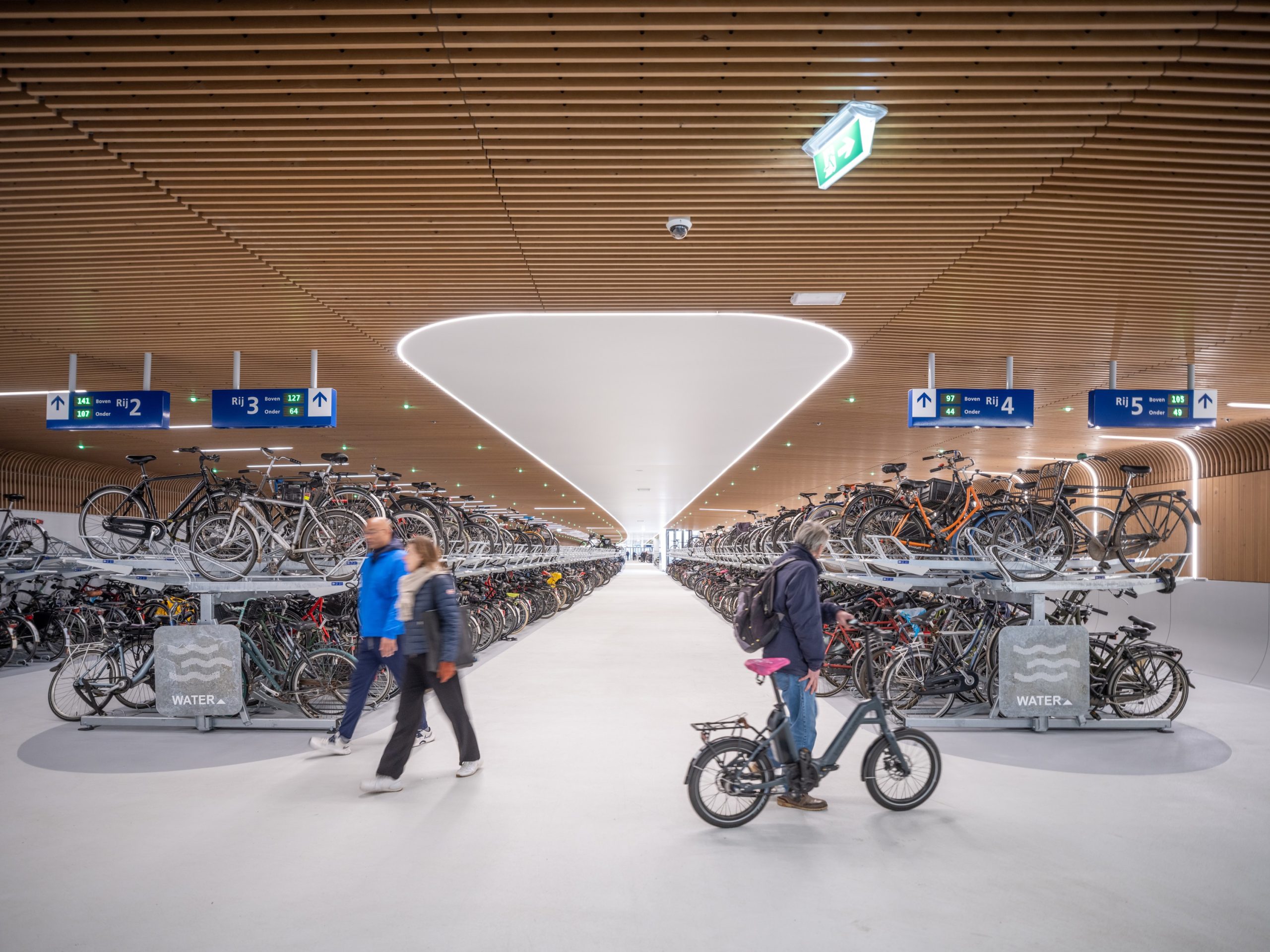
Thankfully, a brilliant, highly empathetic alternative has launched directly within the cycling capital of the world. The city of Amsterdam has officially opened a revolutionary public bicycle parking network that sets a brand-new global standard for civic infrastructure by providing fully covered shelter and free high-speed e-bike charging stations to all residents. This project is not a temporary marketing test built to look progressive for a single weekend festival; it is a rugged, highly functional public utility designed to withstand heavy daily use under unpredictable Dutch skies. What makes this municipal launch so deeply impressive to me as a creator is the absolute precision with which the electrical charging network was built straight into the weatherproofing shell.
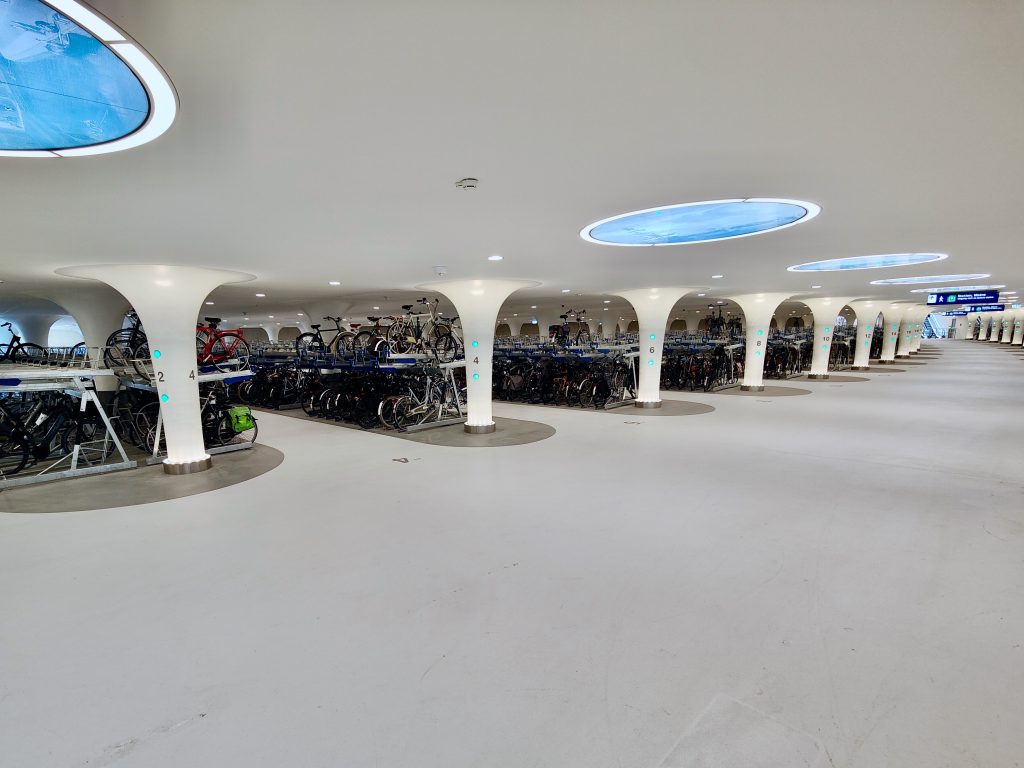
The engineering team did not just slap a generic plastic roof over a few standard metal bike hoops. They developed an integrated structural layout where rain-shielding metal canopies, low-voltage charging electronics, and smart locking tracks work together as a single cohesive unit. While preparing my detailed structural critique of this public transit facility, I wanted to analyze how my written analysis targets technical municipal buyers and urban planners. I processed the drafts through a digital Keyword Density & Content Semantic Analyzer. Running this software allowed me to carefully review my keyword frequency, examine the placement of micro-mobility n-grams, and tune the overall semantic structure to optimize my technical relevance. The data highlighted a vital infrastructure truth: by offering direct, free grid power underneath a heavy-duty drainage canopy, you remove the double burden of weather damage and battery anxiety in one clean step.
Historically, whenever public works departments tried to add charging systems to outdoor bike spaces, they stumbled into a massive operational and safety trap. They built heavy, industrial metal lockboxes containing cheap household power strips, running exposed extension cords across wet concrete pavements. This clumsy approach completely ignores the basic laws of electrical safety and human behavior, resulting in broken equipment plugs, constant water damage, and high maintenance costs for local councils. True technological integration requires a completely opposite path: it demands subsurface wiring paths, completely sealed charging connections, and natural layouts that let the user plug in their vehicle effortlessly without thinking about safety hazards.
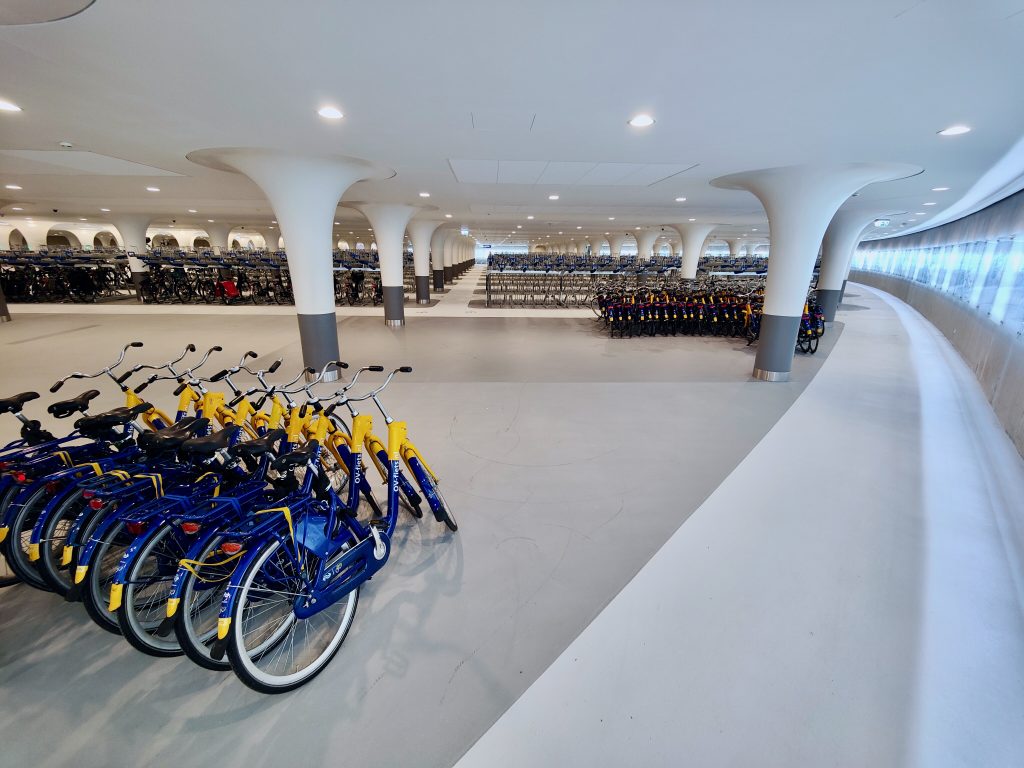
The true brilliance of this new Amsterdam infrastructure lies in its clever use of auto-switching, inductive charging ports hidden within heavy-duty, weather-sealed horizontal lock rails. When a resident slides their front wheel into the secure cradle, the docking channel aligns perfectly with the frame, allowing low-voltage power to flow only when a secure mechanical connection is fully confirmed. There are no exposed outlets left open to catch blowing rain, no dangling wires to trip passersby, and no complicated steps to confuse older riders or young kids. It is elegant, quiet electrical engineering that respects the user’s time while giving city managers the peace of mind that the entire facility can run completely unsupervised through severe winter storms.
I learned a harsh, permanent lesson about the absolute necessity of separating heavy electrical loads from unsealed, natural materials during a project early in my career helping a development firm build an eco-friendly park pavilion in Seattle. The lead architect was completely determined to achieve a rustic, hyper-sustainable look. They instructed our team to mount a series of high-power wireless device charging mats directly inside thick, raw cedar wood benches located right underneath an open-sided timber shelter. On paper and in our digital portfolio photography, the warm wood surface looked like an absolute masterpiece of natural luxury geometry blending with modern convenience.
When you mount high-voltage electrical charging coils directly inside porous, unsealed organic materials exposed to outdoor humidity, you are creating an active fire hazard disguised as sustainable design.
The pavilion opened during a typical damp autumn month, and our beautiful eco-concept immediately turned into an absolute disaster of material degradation. The raw cedar wood continuously absorbed heavy moisture from the foggy air, causing the internal moisture levels of the benches to skyrocket within days. When the wireless induction coils began drawing continuous current to power users’ devices, the high moisture content inside the wood fibers created intense electrical resistance feedback. The charging units overheated rapidly, scorching the interior cavities of the benches and releasing thick columns of smoke right beneath the seating slats. We had to immediately cut off the power supply, tear out the expensive custom woodwork, and replace the mounting bays with non-conductive, sealed composite materials. It was a deeply humbling reminder that no matter how organic you want your design to look, it must always respect the strict rules of moisture insulation and electrical engineering.
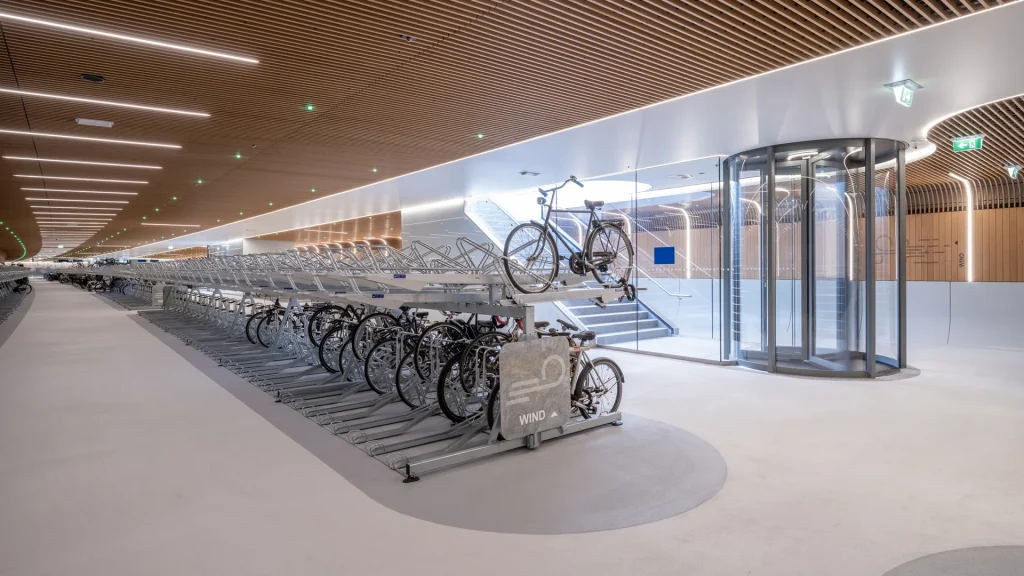
The exceptional success of the covered, free charging infrastructure in the Netherlands should serve as a profound wake-up call for city planners, industrial designers, and civil engineers around the world. We must actively break away from our outdated habit of treating bicycle infrastructure as a low-cost, disposable addition to a car-centric grid. We need to start realizing that as our global populations move rapidly toward clean electric micro-mobility, our public spaces must adapt to provide real protection, reliable utility, and absolute safety for these alternative vehicles. A public bike parking garage should never be a cold, wet rack on a sidewalk corner; it should be an active, welcoming sanctuary that respects the commuter’s choice.
As urban creators, our ultimate objective should be to eliminate the unnecessary material friction of our shared public landscapes, providing a deep sense of order, physical safety, and climate resilience through intelligent architectural choices. We need more regional public works projects that challenge the lazy, automated standards of traditional street furniture manufacturing. Let us stop leaving citizens’ vehicles to rust out in the wind and rain. Instead, let us start engineering smart, covered, and highly functional civic hubs that genuinely support, protect, and honor the human bodies and green technologies that keep our modern cities moving forward.