16
May
23
We call ourselves human beings, not human doings, and that alone says something profound. It suggests that our identity isn’t tied just to what we create or achieve, but to the conscious act of being — of choosing how we exist in the world. No cat or dog carries that burden of choice. Only we do. To “be” is not passive; it’s an act of authorship. It means we have the ability — and the responsibility — to shape ourselves through thought, behavior, and intention.
When I first started designing furniture, I didn’t realize how philosophical the process could be. Every curve, material, and joint reflected not just function, but what I believed design should say about people. The moment I understood that “being” also applies to work, everything changed. Life isn’t simply about what we make, but about who we become in the process of making it.
Humans thrive on competition. It sharpens us, pushes us, fuels innovation. But what if the most meaningful rivalry isn’t with others — but with ourselves? Competing with your present limitations against your potential self is both terrifying and liberating. I realized this after completing a design project that looked great but didn’t feel complete. It wasn’t the client’s feedback that haunted me — it was the quiet thought: “Was this really the best I could have done?”
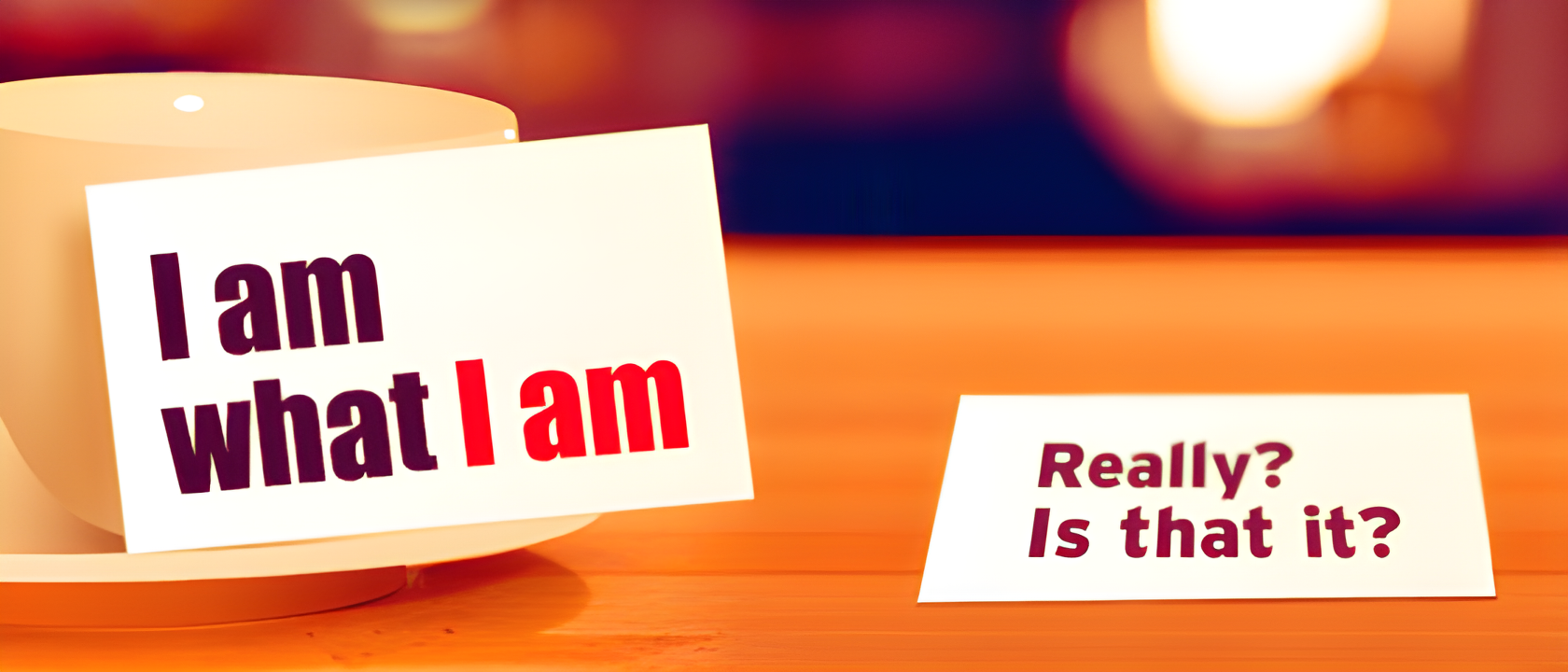
This inner contest is humbling because it leaves no one else to blame. The situation is fixed; the only variable is you. The way you think, adapt, or persist determines the outcome. That is why the phrase “I am what I am” feels incomplete. It’s comfortable, yes, but it ignores the dynamic truth that who you are today is only a version — not the final product.
Almost everyone I know admits they’re capable of more than they’re currently doing. It’s a universal frustration — the feeling of having missed the mark without an obvious reason why. I remember missing out on a design competition early in my career simply because I didn’t submit on time. Not because I lacked skill or ideas, but because I underestimated my own capacity to finish strong. Looking back, I knew I could have done better — the gap between what I did and what I was capable of was painfully clear.
The key is to bring that realization forward, into the moment of decision. Instead of reflecting only afterward, what if you could ask in real time: “Given everything constant, what am I capable of being today?” This single question reframes every task — from small daily choices to life-changing projects — into an honest dialogue between potential and performance.
There’s a simple test I’ve been using for years. At the end of each day, I ask myself: “What was I capable of having been today?” and “What was I, actually?” I jot it down, compare the two, and study the gap. Sometimes it’s tiny — like taking an extra hour to finish a render instead of stopping when tired. Other times, it’s massive — missing an opportunity because of hesitation. But over time, this practice has become less about guilt and more about awareness. It’s like calibrating an instrument — aligning who you are with who you could be.
The beauty of this process is that it transforms even ordinary work into a personal experiment. When I approach a project, I now ask: “If this were the only thing people judged me by, would I be proud of it?” That question alone improves the outcome. It’s self-imposed pressure, but the good kind — the one that sharpens your focus instead of killing your joy.
Design is reflection made physical. You imagine, test, fail, and refine — not to prove perfection, but to move closer to an ideal. The same applies to life. Self-reflection is not indulgence; it’s design thinking turned inward. When you compete with your own potential, every failure becomes data, every success a prototype for improvement. In my studio, I often rework an old concept not because it was bad, but because I now see what it could have been if I had been braver or more patient. That process feels less like correction and more like evolution.
It’s this mindset that separates creators who grow from those who plateau. When reflection becomes a habit, even your mistakes start to look like material for your next version. You stop chasing validation and start chasing alignment — between intention, effort, and possibility.
“I am what I am” sounds like acceptance, but it can also be an excuse. Being content is fine; being static is not. The phrase should really be “I am what I choose to be — today.” Because tomorrow, you get to choose again. Life is constant prototyping. You refine, adjust, redesign — yourself, your beliefs, your work. The situations around you might stay the same, but you can always alter the way you respond.
The only real competition that matters is between who you are and who you are capable of being.
Try it. Ask yourself tonight: “What was I capable of having been today?” The answer may sting at first, but soon it becomes a compass. And if you keep asking — honestly, persistently — one day the difference between what you are and what you could have been will start to disappear. That’s when “I am” finally means something real.