24
May
22
There’s something deeply human about making things by hand. Maybe it’s the control we get back after years of buying whatever was sold to us. Or maybe it’s that quiet satisfaction of saying, “I made this.” DIY design isn’t just a hobby anymore — it’s an act of defiance against disposable culture. And honestly, it feels good to make again.
That’s probably why Pikkpack hit me the way it did. In a time when sneakers are mass-produced by the millions, this project reminded me that simplicity can still be radical. A pair of shoes you finish yourself — it sounds absurd until you actually do it.
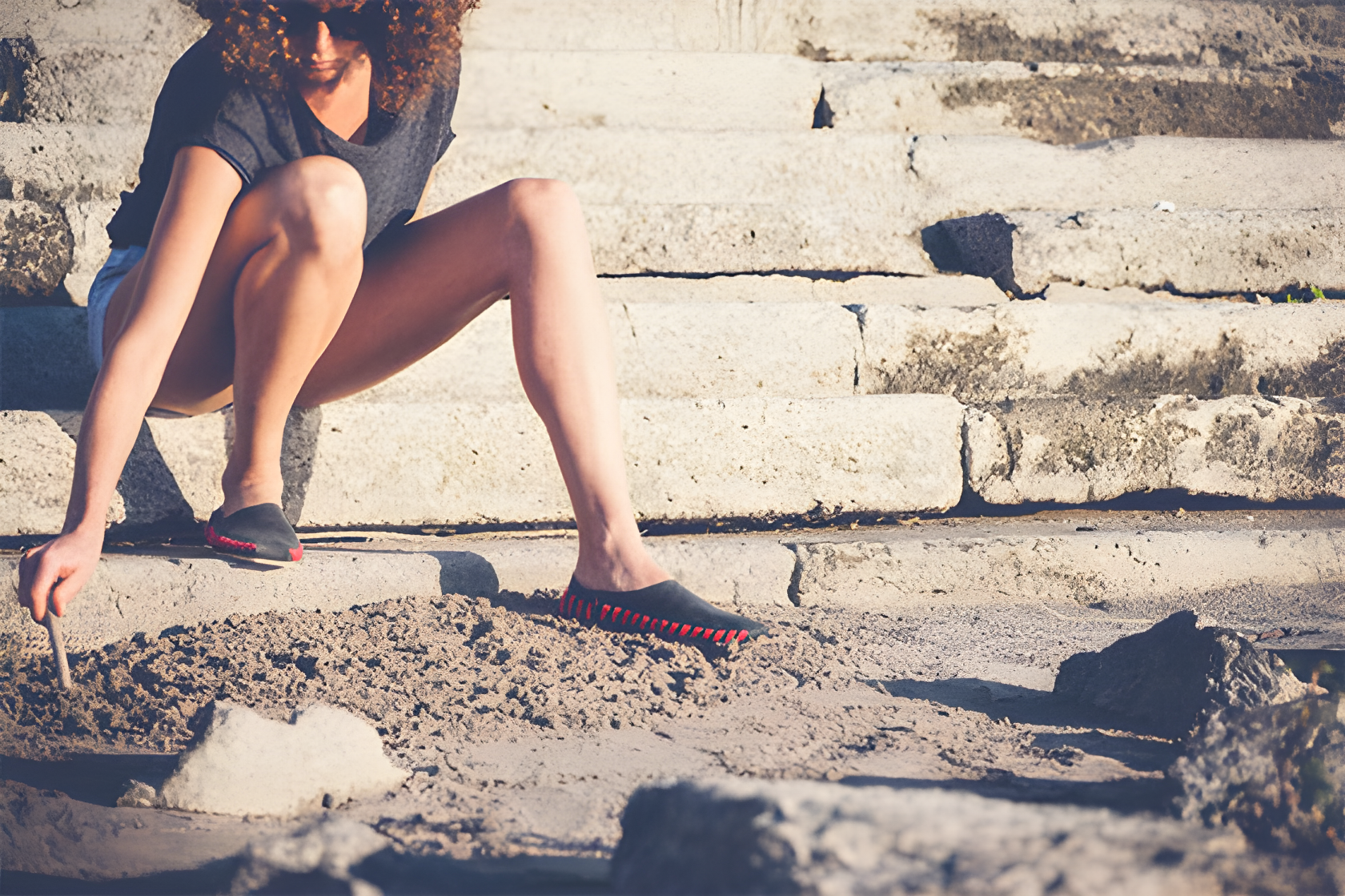
Pikkpack was created by Hungarian designers Sara Gulyás and Hanna Halász. It started as a student project — just an idea inspired by the traditional Bocskor, a type of simple leather footwear. But then it took off. Imagine receiving a flat envelope with a few neatly cut leather pieces and laces. You stitch them together, and voilà — a shoe is born.

The idea feels playful but also quietly profound. The product doesn’t shout “innovation!” — it whispers it. Every step of the making process feels intentional. There’s no app, no fancy tech, just you and a few pieces of leather. It’s the IKEA of shoes — but with soul.
The Bocskor has deep roots in Hungarian history — handmade, functional, and built to last. What Sara and Hanna did was translate that honesty into modern design language. They kept the craft, but stripped away the nostalgia. Pikkpack isn’t trying to mimic old shoes; it’s showing what they might look like in 2025.

I like that duality — old and new, hand and machine, play and precision. It’s what design should be: a conversation across time. When you put Pikkpack together, you’re not just following instructions — you’re participating in that dialogue.
As a designer, I’ve built many things — furniture, models, prototypes — but never shoes. So when I tried Pikkpack, I didn’t expect the emotional punch it delivered. There’s something oddly satisfying about threading the lace through the leather and watching a flat shape turn three-dimensional. It’s not just a craft; it’s a moment of mindfulness.
Maybe it’s because we’re all so used to instant results. You tap a screen, you get a product. Pikkpack forces you to slow down. To touch, fold, and make decisions. It’s tactile design therapy — no buzzwords required.
Good design, to me, always has a sense of play. It invites you in, without lecturing. Pikkpack does that beautifully. Its minimal form hides a smart structure, where every cut and curve serves a purpose. You’re the last step in the design process — and that’s genius.
This philosophy resonates far beyond footwear. It’s about design as participation, not consumption. It’s about taking ownership of what you wear, and maybe even who you are while wearing it. In that sense, Pikkpack isn’t just a product — it’s a design lesson disguised as fun.
There’s always that question: does “DIY” automatically mean “sustainable”? Not necessarily. But projects like Pikkpack move us in that direction. Less waste. Local production. Longer product life. And most importantly — emotional durability. You don’t throw away something you’ve made with your own hands.
Fast fashion is built on distance — between designer and maker, maker and buyer. Pikkpack shortens that distance to zero. That’s not a business model; that’s a statement. And maybe that’s what we need more of.
Pikkpack may look like a quirky experiment, but it carries a quiet cultural weight. It’s proof that design can still surprise, delight, and connect us to the process of creation. That’s something algorithms and mass production can’t replicate.
Design isn’t about making things perfect — it’s about making them yours.
I think design today needs more of that humility — to create not just for efficiency or profit, but for experience. Because sometimes, the best way to appreciate a product is to make it yourself.