29
Sep
25
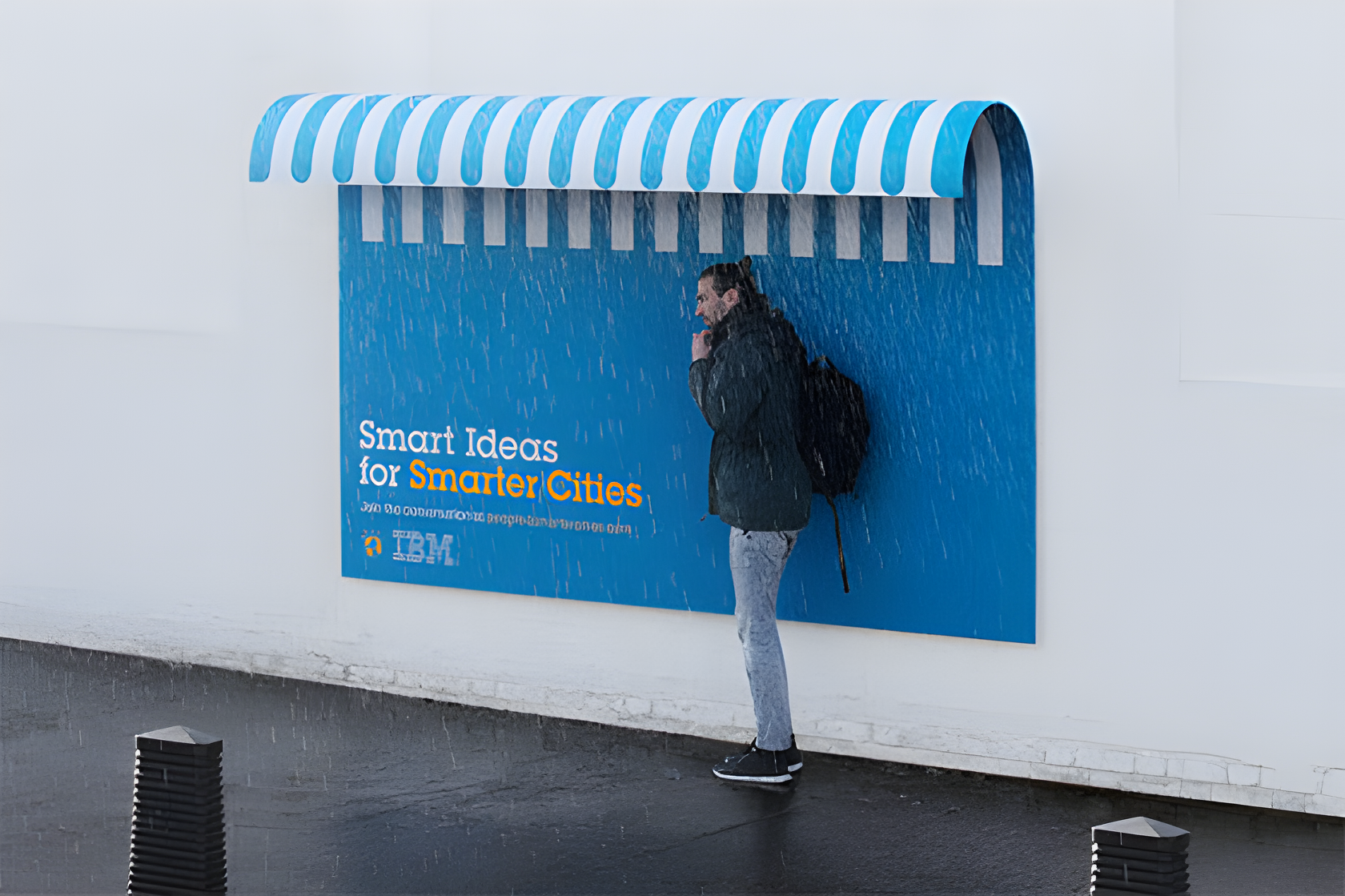
There’s a rare kind of advertising that doesn’t shout, seduce, or interrupt — it simply helps. IBM’s “People for Smarter Cities” campaign did exactly that. Instead of filling walls with slogans, Ogilvy & Mather France turned outdoor billboards into public furniture: benches, ramps, and shelters. The kind of “useful design” that looks almost too humble to be a corporate idea.
You could lean your bike against it, sit down with a sandwich, or take shelter from the rain — all while standing next to a message that read something as simple as “Smart Ideas for Smarter Cities.” It wasn’t art installation; it was empathy printed in 3D form. A reminder that good design — like good technology — solves before it sells.
IBM had long positioned itself as a company for “Smarter Planet.” The French branch took this philosophy literally — out of the cloud and onto the concrete. Together with Ogilvy, they launched “People for Smarter Cities,” a campaign that invited city dwellers and local leaders to see how tiny, thoughtful design decisions could improve urban life.

Each ad piece became a conversation starter. You didn’t just look at it — you used it. A bench to rest while waiting for a bus, a curved panel that turned into a mini-ramp for strollers or wheelchairs, a shelter to hide from sudden rain. It was branding with a pulse, branding that touched asphalt.
We usually think of design at the scale of architecture or interface, but cities often need help at the micro-level. The genius of IBM’s campaign lay in noticing those small, everyday frictions: no place to tie your shoelaces, nowhere to put down a coffee, no cover when weather shifts. Ogilvy’s creative team saw these “tiny inconveniences” as design opportunities.

The ads didn’t fix global problems — they simply made small human moments easier. And that’s what made the message powerful. It whispered instead of screamed. “We care about the details.” It’s a design philosophy that mirrors the way software engineers think: debug the small errors, and the system runs better. In this case, the “system” was the city itself.
For IBM, stepping into urban design wasn’t just marketing theater; it was a test of its own promise. The brand had built its identity around systems thinking and optimization. Translating that mindset into physical space was both risky and refreshing. A company known for servers and code was now designing benches and canopies.
That shift — from abstract innovation to human-scale design — proved that brand values don’t need to stay locked in PowerPoint decks. They can live in steel and wood. For the public, it blurred the boundary between product, communication, and environment. For designers, it was a quiet manifesto: you can communicate an idea through usefulness, not noise.
Ogilvy has always excelled at merging emotion and intellect. In this campaign, their craft was almost invisible — which made it even more brilliant. No overproduced imagery, no heavy copy. Just function presented beautifully. The ads looked like something the city itself had designed.
The agency managed to keep IBM’s DNA intact: analytical, practical, detail-driven. Yet, they humanized it through form. Each installation said, “We see you — and we thought of you.” It’s the kind of advertising that’s hard to measure with impressions but easy to feel in the street. A rare case when the creative idea becomes public infrastructure.
Fast-forward to 2025: cities are filled with smart sensors, AI-driven traffic lights, and app-based services. And yet, the most impactful urban designs remain the simplest. A shaded bench still beats a QR-code-powered billboard when you’re tired and the sun is merciless. IBM’s campaign predicted this shift — from digital cleverness to human clarity.
Today, many brands talk about “purpose.” Few dare to make it physical. But projects like this remind us that the future of communication might not be virtual at all — it might be built right into the sidewalks. A brand that designs for comfort, not clicks, earns something rarer than engagement: trust.
As a designer, I find this campaign inspiring because it proves that functionality can carry as much narrative weight as aesthetics. We often chase originality, but sometimes relevance hides in utility. The fact that a billboard could double as a bench sounds trivial — until you realize how few brands dare to give something truly useful back.
Design isn’t about adding new things — it’s about improving what already exists, until kindness becomes invisible.
If anything, IBM’s street furniture tells us that the best design briefs start with a simple question: “What small thing could make someone’s day better?” That’s a mindset worth bringing into every creative discipline — from UX to product design. Because in the end, whether you code software or craft benches, the goal is the same: make the world slightly easier to live in.