11
Nov
25
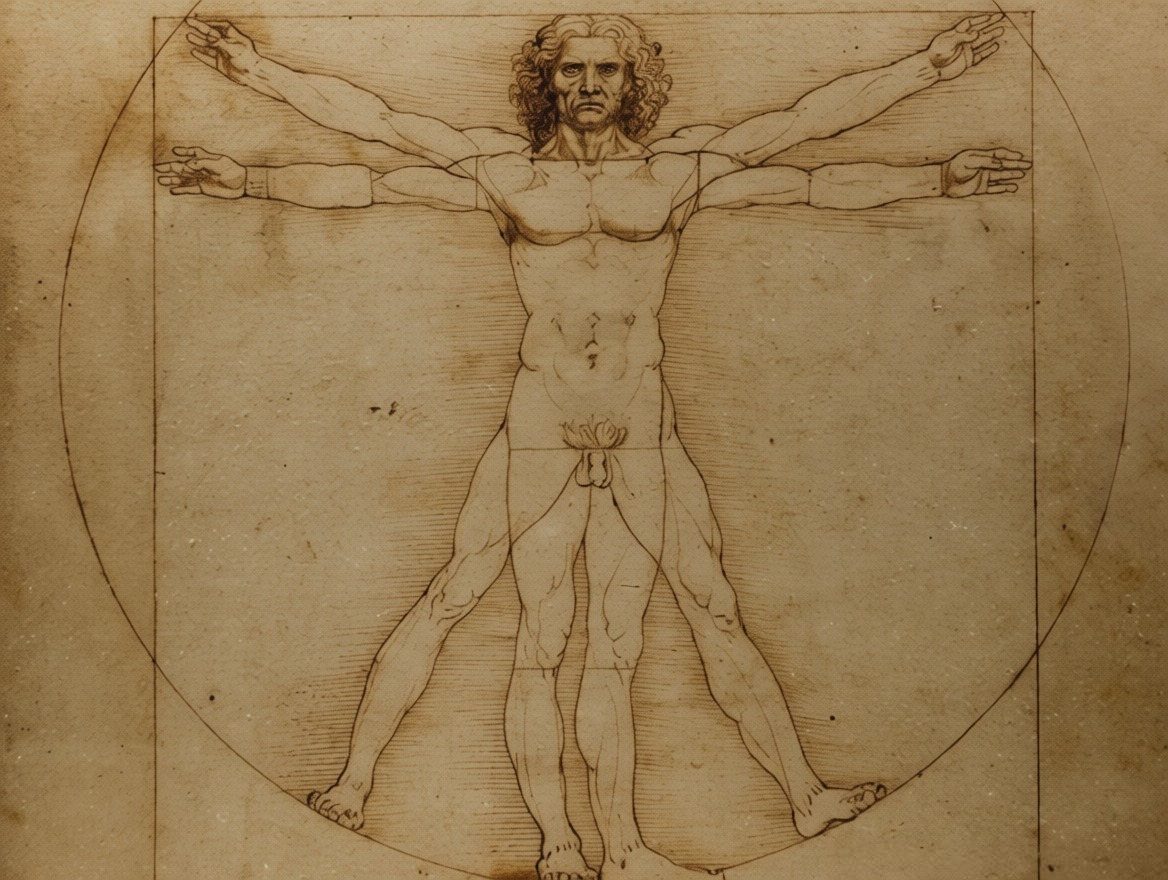
Leonardo DaVinci was not just an artist; he was an observer, a thinker, and a designer in the most integrated sense of the word. His genius lay in combining knowledge from anatomy, architecture, nature, and mechanics to inform his visual creations. He didn’t just draw what he saw—he studied it, questioned it, and organized his observations into coherent systems that guided every stroke. For modern designers, this approach is a reminder that excellence in drawing or design does not rely solely on technique, but on the breadth and depth of knowledge informing each choice.
For instance, DaVinci’s anatomical sketches were not created for artistic flair alone—they served as precise studies to understand movement and structure, directly influencing his architectural concepts and mechanical designs. Translating this philosophy into a contemporary context, designers who actively combine multiple disciplines into their creative workflow tend to develop more innovative, adaptable, and sophisticated work. It’s this cross-pollination of ideas that makes DaVinci’s methods timeless.

One of the core pillars of DaVinci’s method was relentless observation. He captured fleeting moments—birds in flight, the curvature of a leaf, the play of light on a surface—and documented them meticulously. Observation without documentation is fleeting, but when paired with note-taking, it becomes a reliable source of insight for future projects. A modern designer benefits enormously from this practice, as it trains the eye to notice subtle details and patterns that can inform design solutions.
Even simple sketches can reveal patterns or inspire forms that would otherwise be overlooked. By integrating regular observation and detailed note-taking into your workflow, you are creating a reservoir of ideas that can later be synthesized into coherent designs. The study journal is the tool that transforms raw observations into actionable knowledge, giving structure to your creative process and enhancing your problem-solving abilities.
A study journal is the contemporary equivalent of DaVinci’s notebooks. It serves as both a creative playground and a personal archive. Every sketch, note, or idea recorded becomes a resource to reference when developing more complex designs. For instance, a quick sketch of a street lamp could later inspire a furniture design, or an observation of light on water could inform interior lighting concepts. Consistent journaling fosters a habit of reflection and iteration, critical for refining ideas and pushing creative boundaries.
Real-world designers have used journals to track idea evolution from concept to final execution, providing invaluable insight into their design thinking and growth. A study journal is also practical for managing tight deadlines: when submissions or client presentations are due, a well-maintained journal provides a wealth of pre-visualized ideas and sketches ready to be developed into professional outputs.
The choice of materials and page layout is crucial to maximize the utility of a study journal. Leather-bound journals offer durability and tactile satisfaction, encouraging daily engagement. Large pages—A4 or larger—allow for detailed sketches, annotations, and diagrams, enabling designers to tell a visual story effectively. Smaller journals may be portable but compromise the clarity and scale necessary for intricate design exploration.
Page layout matters just as much as page size. Each spread should allow for sequential development of ideas, with space for annotations, diagrams, and iterative sketches. The layout should facilitate comparison, experimentation, and reflection, mimicking the systematic approach DaVinci applied in his own notebooks. This deliberate organization elevates a journal from a simple sketchbook into a powerful creative tool.
DaVinci’s work exemplified experimentation across materials and techniques, and modern designers can adopt a similar strategy. Journals should incorporate mixed media: sketches, pen and ink, textured papers, and collages. These elements not only enrich the visual language of the journal but also stimulate creativity by encouraging new perspectives and unexpected connections. Collages, for instance, can juxtapose unrelated textures, forms, or imagery, sparking design innovations that would not arise in linear thinking.
By blending media, designers develop adaptability and a more expansive creative vocabulary. The practice allows exploration without constraints, nurturing ideas that may eventually mature into full-scale design projects. In essence, the journal becomes both a laboratory and a narrative space for creative experimentation.
A journal should not only collect ideas but organize them. By creating conceptual flow—grouping related sketches, linking observations, and annotating insights—designers can track development and identify recurring patterns or solutions. This systematic approach provides clarity, helping transform fragmented thoughts into coherent visual and conceptual frameworks.
For example, arranging sketches of furniture designs alongside notes on ergonomics, materials, and aesthetics allows a holistic view of the design process. Over time, these organized journals reveal personal design language, strengths, and areas for improvement, serving both as a creative compass and as a professional reference for presentations and portfolios.
The ultimate goal of a study journal is actionable insight. Sketches, observations, and collages serve as raw material that can be developed into polished, professional designs. Designers who habitually use journals are able to iterate rapidly, make informed decisions, and present work that is both innovative and grounded. The journal becomes a bridge between inspiration and execution, ensuring that ideas captured in fleeting moments can influence high-quality outcomes.
By adopting DaVinci’s methods—holistic observation, disciplined journaling, strategic use of materials, and systematic organization—designers can significantly elevate their work. This approach cultivates creativity, precision, and professional readiness, echoing the timeless genius of Leonardo in a contemporary context.