30
Jun
24
FARQ’s Cinema Ocho is more than a film series; it’s a cultural experiment that brings cinema directly into the academic environment. The initiative enables students and faculty to experience diverse cinematic styles—from auteur cinema to documentaries—without leaving the campus. As a designer, I was immediately intrigued by the sensory opportunities this project offers. Cinema is inherently multi-sensory, merging image, sound, and atmosphere, and the Popcorn Project embraces this idea by extending it to snacks.
Observing the first cycle of Cinema Ocho, I noticed how the environment, lighting, and even the seating arrangement influenced the audience’s perception. This context becomes critical when designing something as seemingly simple as snack packaging. The goal isn’t just to hold popcorn or traditional snacks; it’s to complement the cinematic narrative, enhancing the overall experience. When done right, packaging acts as a silent guide, setting expectations and engaging the senses before the first frame even rolls.
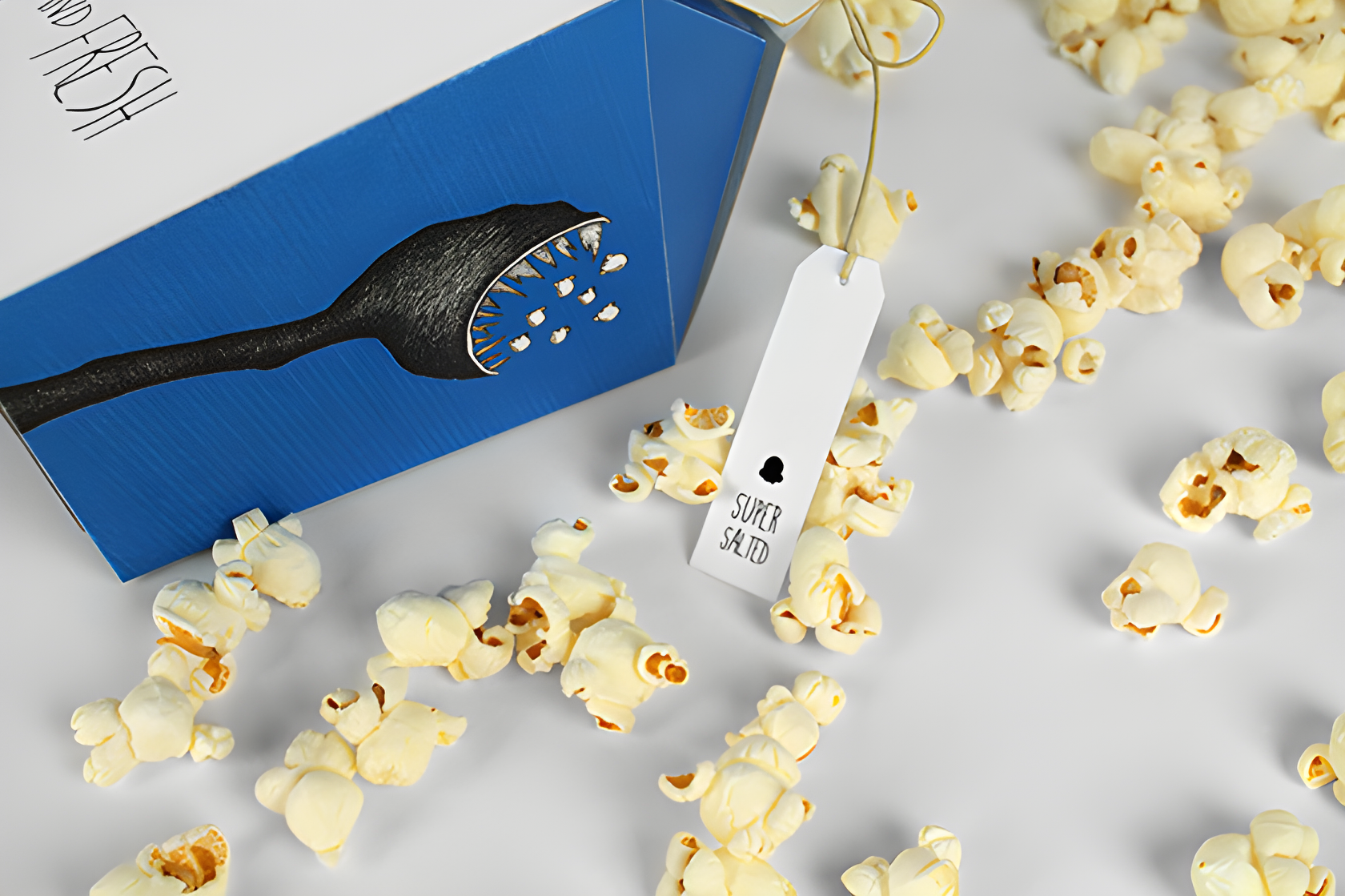
The Popcorn Project challenges designers to rethink conventional packaging forms. Traditional popcorn bags and snack boxes are functional but uninspired. Here, the packaging becomes part of the storytelling. Each box or bag is conceived with thematic alignment in mind, whether for environmental documentaries, indigenous film cycles, or cult cinema. In my own experiments, I aimed to integrate narrative cues—textures, colors, and shapes—that reflect the thematic essence of each screening.


The project encourages designers to consider volumetric innovation. A snack container isn’t merely a rectangle or a pouch; it can be a sculptural object that interacts with hands, eyes, and even the sound of popcorn shifting inside. Designing these forms requires a deep understanding of geometry, material behavior, and human interaction, an approach that turns a simple product into a mini experience in itself.
In designing for Cinema Ocho, sensory engagement is paramount. The Popcorn Project emphasizes that taste, touch, and visual cues collectively influence perception. Packaging design must be approachable, tactile, and visually stimulating. During prototype testing, we explored different textures for cardboard, biodegradable materials for sustainability, and embossing techniques to add visual depth. Each decision impacts the user experience and reinforces the thematic connection to the film cycles.
As David Lynch famously noted, cinema allows us to live elsewhere without leaving our seats. Packaging extends this idea—snacks become part of the immersive narrative, inviting users to interact with film in an unexpected way. I’ve observed that when packaging resonates on multiple sensory levels, audiences subconsciously develop a stronger emotional bond with the cinematic experience.
Volume and form play a critical role in the Popcorn Project. Moving beyond flat, rectangular packaging allows the designer to create playful interactions, surprise, and delight. We experimented with foldable containers, modular shapes, and visually disruptive forms that challenge expectations. One experimental design used a spiral form, echoing motion in film reels, enhancing both visual intrigue and functional storage for popcorn.
This approach aligns with my philosophy that design is a living experiment. When students or audiences pick up these unconventional containers, they engage with the object physically and emotionally. Packaging ceases to be a passive holder and becomes an active component of storytelling, reinforcing the narrative while offering tactile pleasure. Such experimentation encourages designers to break free from standard conventions and explore creative geometry in practical applications.
Packaging can be both general and specific. Some designs suit all Cinema Ocho screenings, while others target thematic cycles like environmental films or indigenous narratives. Matching packaging to a theme requires research, empathy, and narrative thinking. For instance, for an indigenous-focused cycle, incorporating cultural patterns subtly into the container’s form and surface elevates the experience without resorting to cliché.
The process of aligning themes with packaging encourages designers to think about cultural relevance, sustainability, and visual storytelling simultaneously. During the Popcorn Project, I discovered that even small details—such as fold mechanisms, handle design, or typography—can reinforce the narrative intent. Thoughtful thematic design ensures the packaging is memorable, functional, and respectful, embodying both creativity and responsibility.
“Snacks are not just food—they are companions to stories, part of the journey, and vessels for creative expression.” — Evan Carter
Working on Popcorn Project packaging reaffirmed several key lessons. First, design is inseparable from context: the same snack packaged differently can evoke distinct experiences depending on the surrounding environment. Second, innovation thrives under constraints: materials, sustainability requirements, and functional limits force creative problem-solving. Finally, narrative alignment transforms simple objects into experiential artifacts that resonate with audiences emotionally and sensorially.
The Popcorn Project exemplifies how thoughtful packaging bridges cinema, culture, and design. It demonstrates that even mundane objects like snack containers can inspire, provoke, and delight when approached with curiosity, sensitivity, and creativity. As designers, engaging with such projects reminds us that every detail, every fold, every texture contributes to the narrative experience.