06
May
25
Barbershops have always been more than places to cut hair. In the early 20th century, they were social clubs — spaces where people exchanged stories, advice, and even politics. But as the decades passed, that sense of ritual faded, replaced by sterile salons and fast-service grooming. Then something changed. Around the late 2010s, barbers began reclaiming their roots — and redesigning them.
By 2025, barbershops have evolved into hybrid spaces: part atelier, part social hub, part brand. The scent of shaving cream is still there, but so is the sound of curated playlists, the glow of smart lighting, and the scent of artisan coffee. What was once manual craft is now design thinking — translated into interiors, experiences, and even digital presence. Barbers 3.0 aren’t just cutting hair; they’re shaping culture.
Today’s barber isn’t just a craftsman — he’s a strategist. Every element of a modern barbershop, from typography on the glass door to the tone of voice on social media, is intentional. You walk in and instantly know what kind of story you’re part of. Some brands play on vintage nostalgia, others lean into futuristic minimalism. Either way, it’s not random — it’s designed identity.

Working in design myself, I recognize the same principles: layout, texture, rhythm, consistency. I’ve seen barbers who treat their spaces like product prototypes — testing materials, adjusting lighting, even analyzing how people sit and wait. It’s not vanity; it’s UX for the real world. The experience starts before the haircut and lingers after it.
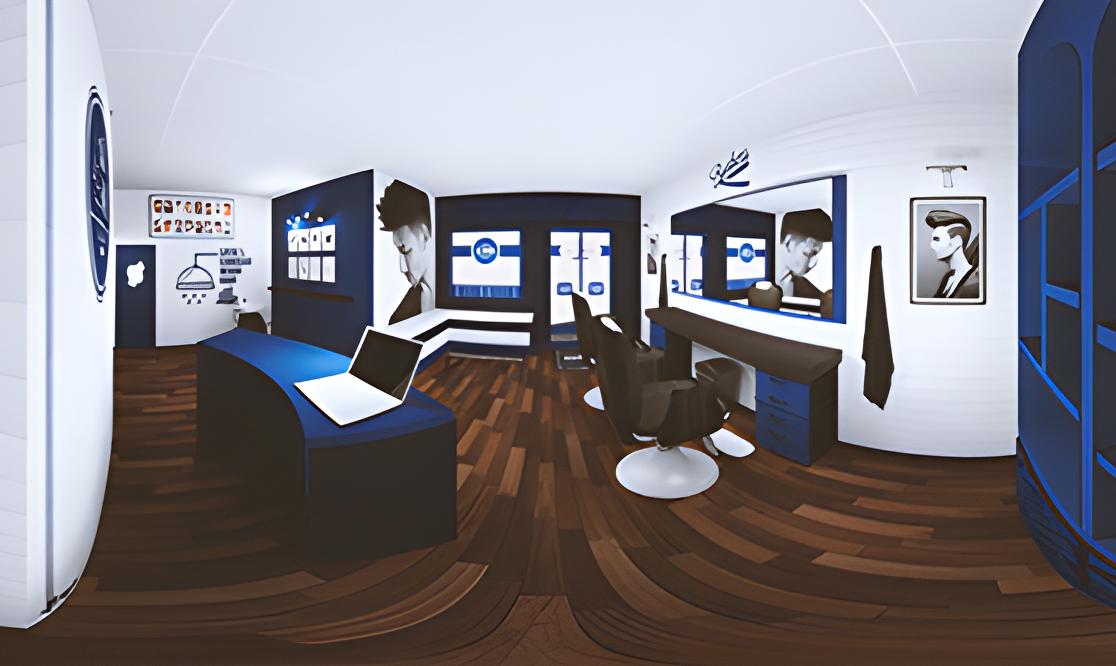
Scroll through Instagram or step into a shop in London, Berlin, or Melbourne, and you’ll notice a pattern. The modern barber aesthetic is confident, clean, but deeply human. Concrete walls meet warm wood, matte black fixtures contrast soft textiles. Every visual element whispers “crafted.” Even the logo design — bold serif fonts, stripped-down icons — feels part of a new masculinity that values subtlety over swagger.

These choices matter. They tell men it’s okay to care, to appreciate detail, to be intentional about how you present yourself. The same principle drives good design in general — we’re all just trying to align form and identity. In that sense, barbers have become unexpected teachers in empathy and aesthetics.
The conversation about masculinity has shifted dramatically in recent years. What used to be seen as vanity is now viewed as self-respect. Barbershops helped redefine that boundary. A haircut isn’t just maintenance; it’s a quiet act of self-expression. It’s also a moment of vulnerability — sitting in a chair, trusting someone with your image. That’s where design meets psychology.

Many barbers I’ve spoken to say the best part of their job isn’t the cut — it’s the conversation. In a hyper-digital age, that small human ritual feels radical. And in that ritual lies a new kind of beauty: honest, crafted, deeply personal. It’s the same honesty that we, as designers, chase in our work — making people feel seen and understood without words.
Barbers 3.0 don’t fear technology — they use it with intuition. AI now suggests haircuts based on facial geometry and lifestyle data. Augmented mirrors allow clients to preview styles in real time. Appointment systems sync with wearable devices, adjusting lighting and even ambient scent based on mood. Sounds excessive? Maybe. But the best barbers use tech not as a gimmick, but as a tool to deepen connection.

I once saw a small studio in Manchester that used an AR mirror system. The barber laughed, saying, “It’s not about showing them options. It’s about showing them confidence.” That line stuck with me. Good design — whether it’s an app or a haircut — gives people confidence without shouting. Technology, in this sense, becomes invisible empathy.
As a designer, I’ve always believed that great spaces shape behavior. Sitting in a well-designed barbershop reminds me how environment affects emotion. The way the light hits the mirror, the sound of scissors, the small ritual of dusting off your neck — it’s choreography. The experience feels intentional, almost sacred.
A barbershop is a masterclass in design empathy — every detail matters because every person does.
That’s the lesson of Barbers 3.0 for designers like me. True innovation isn’t in software or branding — it’s in understanding people. Whether you’re designing a website or a haircut, the challenge is the same: create something honest, functional, and kind. Because when design cares, people feel it.