14
Mar
22
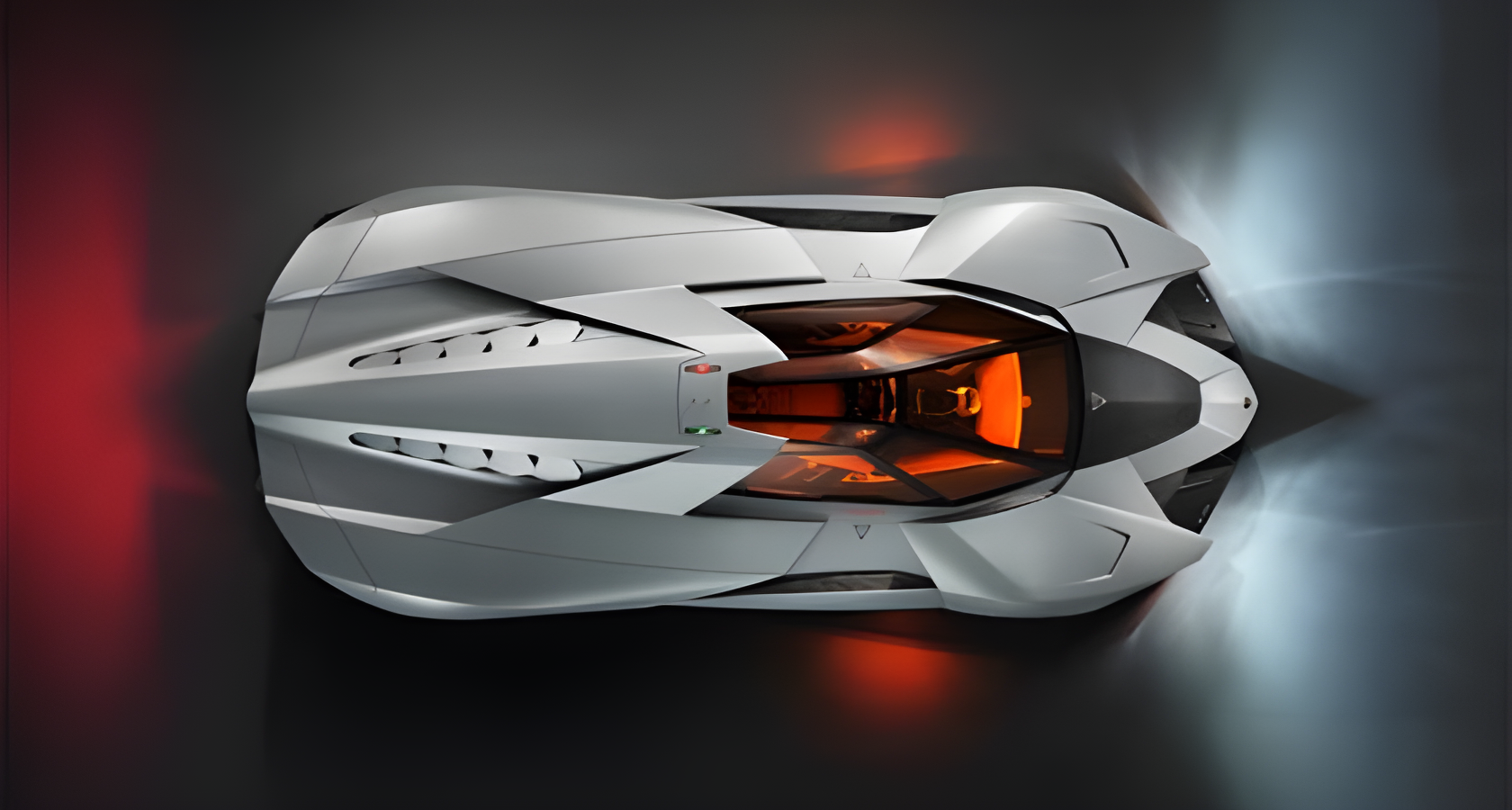
Fifty years is a long way for any automaker, and for Lamborghini, the brand that turned rebellion into its DNA, a polite celebration was never on the table. Instead, they brought chaos to the stage. The Lamborghini Egoista — a one-seater, aircraft-inspired, unapologetically self-centered concept — was not a gift to fans. It was a mirror held up to the company’s own philosophy: extreme, emotional, and slightly insane.
Unveiled in 2013 during the brand’s 50th anniversary, the Egoista came as a complete surprise. Its name — literally “selfish” in Italian — was both confession and declaration. You couldn’t drive it with a passenger even if you wanted to. You couldn’t access it easily. You could only admire it or envy it. The car wasn’t just built for performance; it was designed as a statement about individuality pushed to its edge.
Before Egoista, Lamborghini had already shocked the design world with the Veneno — a car so extreme it divided even loyalists. Many considered it the aesthetic low point of the brand: too angular, too loud, too much of everything. Yet, in hindsight, the Veneno was merely a rehearsal for the Egoista — a concept that no longer tried to please anyone. Its body was a blend of sharp aluminum and carbon fiber, shaped more like a stealth jet than a supercar.
The nose drew inspiration from Formula 1 aerodynamics, while the canopy was pure Apache helicopter. It wasn’t designed to fit in; it was designed to declare war on subtlety. Every surface screamed motion. Every edge served drama. And perhaps that was the point — a self-portrait of a brand that refuses to be domesticated.
Walter de Silva, the man behind the Egoista’s design, described it as a “car built for one person only — the driver who wants to have fun alone.” It wasn’t about practicality, and it wasn’t about market success. It was a love letter to the irrational part of creativity — that dangerous zone where design stops being useful and becomes emotional sculpture.

At its core, the Egoista challenges the idea that design must always serve function. Sometimes, it’s allowed to serve identity.
With its 600-horsepower V10 engine (borrowed from the Gallardo) and a chassis that looks like it came from a Hot Wheels fantasy, the Egoista blurred the line between toy and machine. It didn’t belong to the roads or the racetrack — it belonged to imagination.
Climbing into the Egoista is not so much an act of entry as it is a ritual. You have to remove the steering wheel, open the canopy, stand on the seat, then crawl down the bodywork like a pilot exiting a fighter jet. Lamborghini didn’t make it difficult by accident — it was a deliberate metaphor. You weren’t getting into a car; you were entering an idea.
The cockpit is pure aircraft minimalism: digital readouts, limited visibility, and a sense of isolation. Everything in it says “you’re alone here, and that’s exactly how it should be.” There’s no comfort, no compromise, no second seat — just you and the machine. It’s absurd, it’s inconvenient, and it’s absolutely magnificent.
Hot Wheels, with their exaggerated proportions and impossible silhouettes, have long turned fantasy into scale. And in a strange twist, Lamborghini did the same — only in real size. The 1:64 Hot Wheels version of the Egoista wasn’t just a toy; it was an acknowledgment that this car already lived in that imaginative dimension.
For many fans, the miniature became the only way to “own” the Egoista. It was both ironic and perfect: the wildest car Lamborghini ever built was more accessible as a toy than as a vehicle. And that somehow completes the circle — from childhood dreams to grown-up extravagance.
Design, at its boldest, is selfish. It begins with one person’s vision, one person’s obsession. The Lamborghini Egoista turned that truth into physical form. For all its impracticality, it remains an honest symbol of creativity unchained from market logic.
Looking back in 2025, the Egoista still feels prophetic. In an era where cars are increasingly autonomous, sustainable, and emotionless, it stands as a fossil from a time when design still dared to be irrational. Maybe that’s what makes it timeless — not its horsepower or carbon fiber, but its refusal to apologize for wanting to be extraordinary.