18
Mar
23
Back braces have been a staple in scoliosis treatment for years, but let’s face it—they often feel like wearing a rigid metal cage under your clothes. Teens and kids already navigate self-consciousness about their bodies, and a clunky, medical-looking device only adds fuel to that fire. I’ve seen patients avoid wearing them altogether, and honestly, I don’t blame them. When something designed to help feels uncomfortable, restrictive, or uncool, the human response is almost always rejection.
This is exactly why the Bespoke project feels so exciting. The goal isn’t just to provide medical support—it’s about changing the way kids feel about wearing their braces. If a back brace can be something they want to show off rather than hide, compliance and outcomes improve naturally. That’s a principle every designer should love: combine function with emotional resonance. The young patients’ perspective is critical here, and ignoring it has historically been the biggest design flaw in orthopedics.
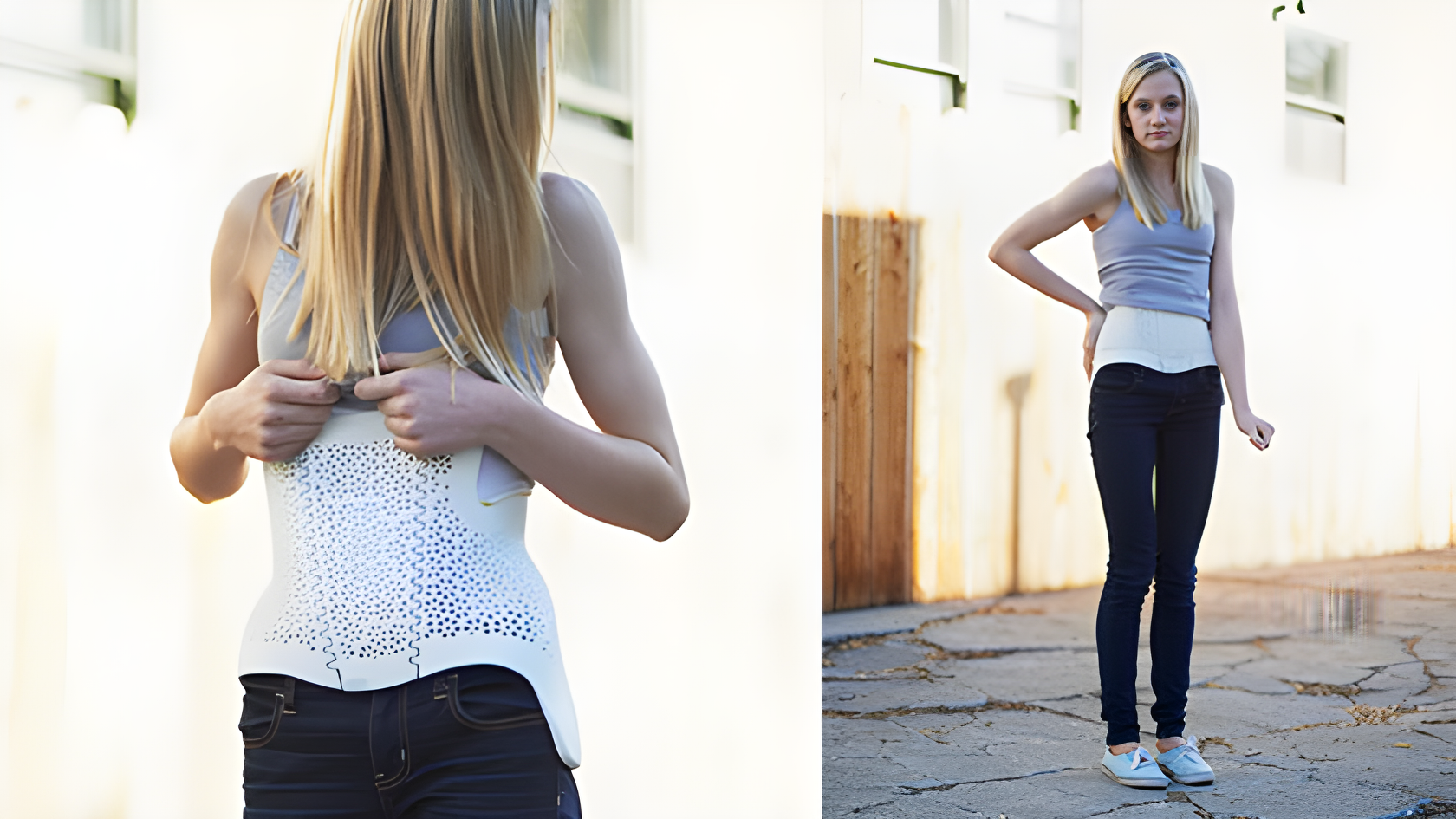
Bespoke is the product of collaboration between 3D Systems and a team of forward-thinking medical professionals. Their mission was clear: design a back brace that kids and teens wouldn’t mind wearing, and ideally, one they’d feel proud to wear. Unlike traditional models, Bespoke merges fashion with function. It’s not just a medical device; it’s a statement piece. I remember seeing the survey results where children were happily showing off their braces. That’s huge—turning a health necessity into a source of pride is exactly what good design can do.
The philosophy behind Bespoke is simple: people are more likely to embrace solutions they feel good about. By focusing on aesthetics, ergonomics, and customization, the designers have created something that respects the wearer’s body and mind. In my experience working with furniture and interiors, this idea is universal: objects that feel tailored to an individual get used correctly and consistently. Bespoke is applying the same principle to medical design, and the results speak for themselves.
The real innovation of Bespoke lies in its use of 3D printing technology. Each brace is custom-fit to the patient’s exact body contours, ensuring comfort and maximum effectiveness. Traditional braces rely on generic molds that often cause pressure points or limit movement. Bespoke eliminates that problem entirely, allowing kids and teens to move freely while still getting the corrective support they need. It’s a perfect example of how technology can enhance both function and user experience simultaneously.
From a design standpoint, this level of personalization is fascinating. The brace doesn’t just sit on the body—it becomes almost an extension of it. Every curve, angle, and material choice is deliberate. I’ve always believed that great design should feel invisible in the way it supports daily life, and Bespoke nails this principle. The fact that a medical device can feel natural, stylish, and empowering is nothing short of a design triumph in my book.
Initial surveys and pilot tests reveal that kids actually like wearing Bespoke braces. Instead of feeling embarrassed, children are showing off their braces and even customizing them with colors or patterns. That shift in attitude is remarkable. Teens, who are typically more skeptical and self-conscious, remain a key demographic to watch, but early indications are promising. This reinforces a core design truth: aesthetics matter. If something looks and feels good, people are far more likely to engage with it consistently.
I’ve seen firsthand how user experience can transform a product’s success. In furniture design, ergonomics and aesthetics are inseparable; the same principle applies here. When a brace becomes a source of personal expression rather than a medical burden, compliance improves, and the patient’s mental wellbeing benefits. Bespoke doesn’t just correct spinal alignment—it also addresses the emotional side of treatment.
Bespoke underwent a rigorous pilot program at UCSF Benioff Children’s Hospital to validate both its medical effectiveness and its design appeal. Doctors, designers, and patients worked closely together to fine-tune each brace. Adjustments ranged from minor curvature tweaks to material flexibility and even aesthetic choices like color accents. Each iteration aimed to balance function, comfort, and style. From my perspective, this iterative process is exactly what design should look like: test, learn, and refine based on real-world feedback.
The results were encouraging. Children adapted quickly and wore the braces without complaint, while doctors observed that spinal alignment outcomes met expectations. This collaborative approach highlights the value of bridging design and medicine. When both fields communicate effectively, the end product benefits the user in multiple dimensions: physical, psychological, and aesthetic.
Bespoke’s design philosophy emphasizes three pillars: fashion, comfort, and health. By focusing on sleek lines, custom fit, and ergonomics, the brace addresses the core concerns that often make kids and teens reject traditional models. Materials are lightweight and flexible, and the fit is tailored to each individual’s body. The result is a device that doesn’t just work well medically—it feels good to wear and looks good too.
From my experience, this attention to human factors is crucial. People are more likely to embrace technology when it feels thoughtfully designed. Bespoke demonstrates that health devices don’t have to be unattractive or uncomfortable. They can be stylish, supportive, and empowering. It’s a small but meaningful shift in how we approach pediatric orthopedics, and it’s exactly the kind of innovation that excites me as a designer.
Bespoke could very well redefine pediatric scoliosis care globally. By combining advanced 3D printing, customization, and thoughtful design, it offers a holistic solution that considers both physical and emotional needs. If teens embrace the brace as confidently as children do, the impact on compliance and overall health outcomes could be substantial. Beyond scoliosis, this approach may inspire similar innovations across other medical devices, proving that style and function can coexist.
As a designer, I find this convergence of aesthetics, technology, and healthcare deeply inspiring. Bespoke reminds us that thoughtful design isn’t just about making things look good—it’s about improving lives. By empowering users and making medical treatment more approachable, Bespoke sets a new standard. I can’t wait to see how this concept evolves and what it inspires next in the world of health-focused design.