05
Nov
25
Le Corbusier remains one of the most influential figures in modern architecture. His five principles of modernism fundamentally shaped how architects conceive buildings, interiors, and the relationship between structure and space. Even decades later, these principles are embedded in contemporary design, influencing both large-scale projects and intimate sketches alike. For architects and students, understanding these concepts goes beyond replication; it’s about interpreting the ideas and integrating them into one’s own creative vision. From the use of pilotis to the articulation of roof terraces, each principle encourages a thoughtful approach to both drawing and building.
In practical terms, the principles provide a structured framework that allows for creativity while maintaining harmony. By studying Le Corbusier’s approach, designers learn to balance aesthetic expression with spatial logic. Even when creating quick sketches or conceptual drawings, these ideas help guide composition, light, and shadow, resulting in drawings that are both intelligent and compelling.
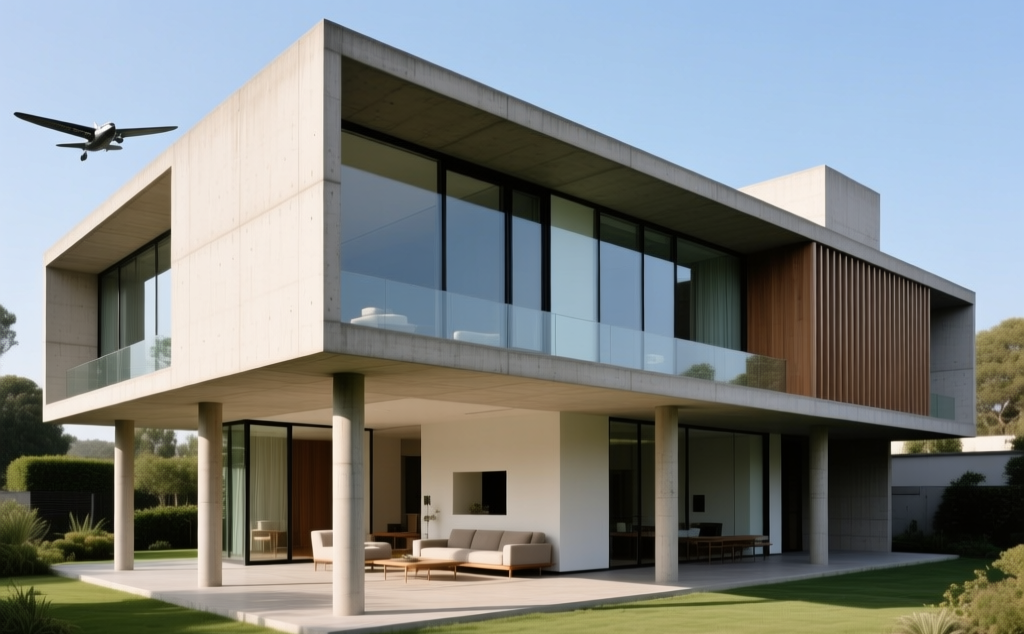
Pilotis elevate a building, creating a sense of lightness while allowing circulation beneath. In drawing, this translates to studying the interplay between columns and ground, and how shadows cast from these supports affect spatial perception. By raising the structure slightly above ground, designers can experiment with stairways, landscaping, and visual openness, making the drawing more dynamic. For instance, positioning five steps leading to the entrance can subtly guide the viewer’s eye and reinforce spatial hierarchy.

When illustrating pilotis, it’s crucial to understand perspective, foreshortening, and shadow behavior. Accurate representation of these elements not only emphasizes structural elegance but also adds depth to architectural sketches. Over time, the practice of integrating pilotis sharpens spatial reasoning and creates drawings that are visually coherent and professionally insightful.
The free plan separates load-bearing columns from walls, allowing flexible interior arrangements. In sketches, this principle encourages designers to depict transparent spaces with offset columns and open layouts. Highlighting furniture, partitions, and circulation paths through lightly tinted glazing demonstrates how interiors interact with structural elements. Drawing transparency effectively involves softening lines and muting colors behind glass planes to suggest depth and materiality.

Mastering free plan drawing empowers designers to visualize spatial fluidity, ensuring that every element serves both functional and aesthetic purposes. By sketching multiple iterations of interior layouts, one can explore balance, rhythm, and proportion, producing illustrations that are not only accurate but also evocative.
Free facades detach exterior walls from load-bearing functions, granting architects freedom in facade composition. In drawing, this principle can be explored by representing shadow play, light penetration, and transparency effects. Even subtle shadows cast on glass or walls can convey depth, materiality, and orientation. Designers are encouraged to experiment with facades, emphasizing window placements, recesses, and openings as compositional tools rather than mere structural necessities.

Practicing free facade drawing enhances visual storytelling. By understanding how walls interact with light, designers gain control over mood, rhythm, and spatial hierarchy. The resulting sketches communicate architectural intent with clarity and sophistication.
Horizontal strip windows introduce continuous light and a modern aesthetic. In drawing, these windows can define rhythm across a facade while maintaining a sense of openness. Representing interiors seen through these windows, even in simplified form, adds realism and narrative depth. Horizontal repetition also challenges designers to maintain consistent perspective, proportions, and shadow alignment, refining technical skills.

In practice, strip windows teach the importance of balancing solid and void, exterior and interior. By sketching various window treatments and their effects on light, designers can create drawings that feel alive, spatially complex, and visually coherent.
Roof terraces transform flat roofs into usable spaces and visual elements. In drawings, representing terraces with tiled textures and shadows emphasizes three-dimensionality and materiality. Including furniture, greenery, and human figures can enhance scale and context. For axonometric or aerial perspectives, roof terraces serve as compositional anchors that guide the viewer’s gaze across the building.

Practicing roof terrace illustrations develops skills in depth perception, shadow rendering, and surface detailing. It also reinforces the habit of integrating functional elements into visual compositions, producing smarter, more engaging architectural drawings.
Integrating these five principles into modern drawings requires thoughtful observation and experimentation. Beyond merely copying concepts, designers should interpret pilotis, free plans, facades, strip windows, and terraces in ways that reflect contemporary context, materials, and client needs. This approach transforms sketches from technical exercises into expressive, conceptually grounded illustrations. Observing light, shadow, and transparency in real spaces further informs drawing decisions, bridging theory and practice.
By continuously applying these principles, architects develop a coherent visual vocabulary. Each sketch becomes a learning tool that refines perspective, proportion, and composition, ultimately resulting in professional, insightful, and conceptually rich drawings.
Smart drawings combine technical accuracy with conceptual understanding, producing illustrations that communicate intent, provoke curiosity, and enhance professional credibility. By applying Le Corbusier’s principles thoughtfully, architects create drawings that are not only visually compelling but also strategically composed. This dual focus ensures clarity, precision, and an expressive, personal touch. For students and professionals alike, developing smart drawing skills opens doors to more meaningful design explorations and stronger presentations.
Ultimately, the mastery of modernist principles in drawing equips architects with the ability to craft work that stands out while remaining grounded in theory. It encourages a disciplined yet creative approach, fostering confidence and competence in both sketches and built projects.