13
Apr
23
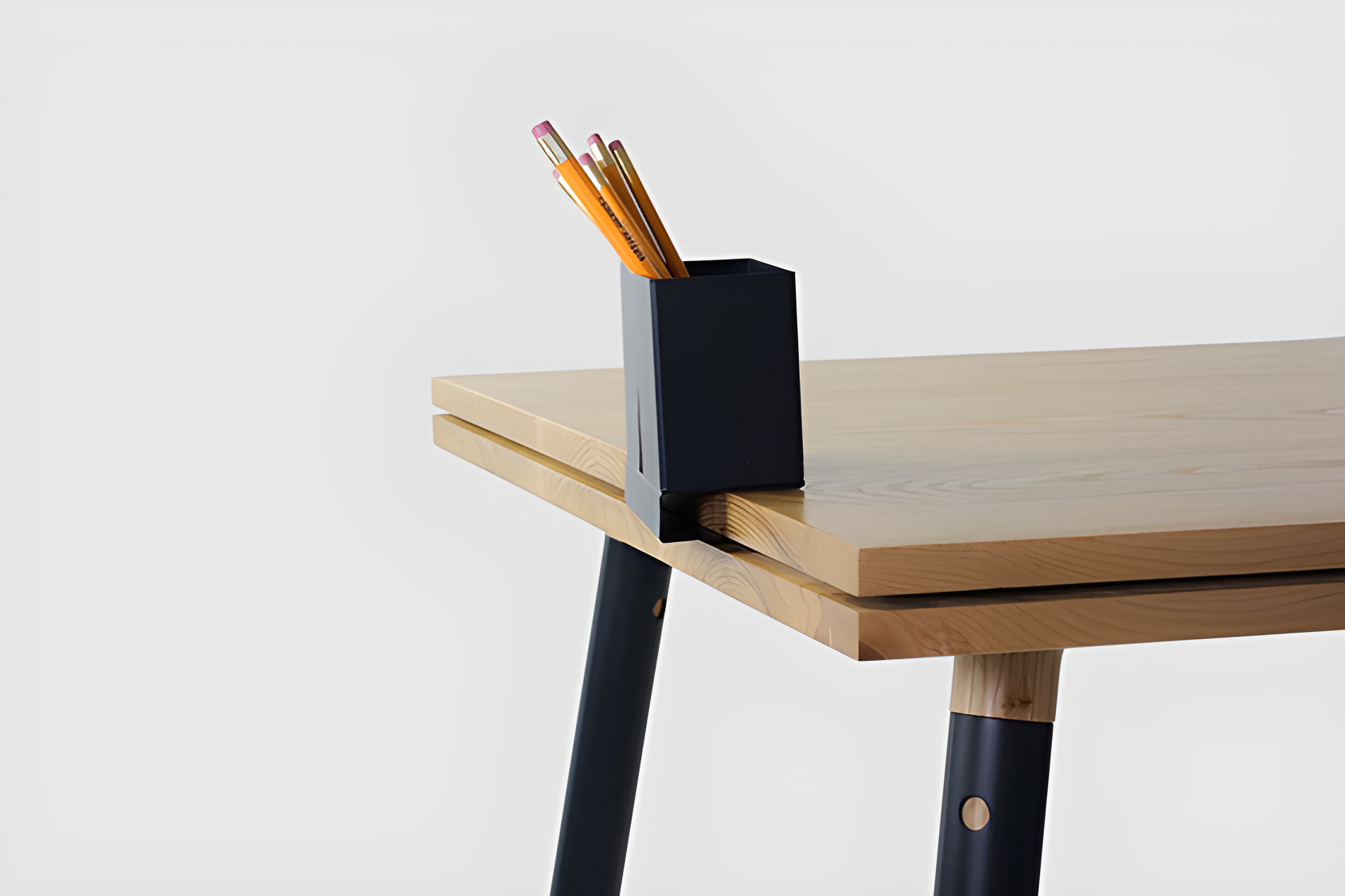
Every so often, a piece of furniture manages to say more than it shows. Adolfo Navarro’s Tenderete Desk does exactly that — not through complexity or technological cleverness, but through silence. It’s the kind of design that doesn’t shout for attention yet somehow stays in your mind long after you’ve seen it. The proportions are calm, the joinery is visible, and the materials feel unpretentious — almost humble. But behind that quiet exterior lies an emotional intelligence that many industrial products lack.
As someone who’s spent hours sketching and sanding furniture models, I can say that the hardest thing isn’t making something new — it’s knowing when to stop. Navarro seems to understand that. The Tenderete Desk balances precision and imperfection in a way that makes it feel alive, not sterile. It’s the kind of object you grow attached to without realizing it.
Minimalism, for many designers, has become a safe aesthetic. Smooth surfaces, clean lines, neutral colors — the usual checklist. But Navarro approaches minimalism as a form of honesty. There’s nothing to hide behind; every joint, every shadow has to mean something. The Tenderete Desk is a dialogue between what’s necessary and what’s humane. It has personality, but no ego. The structure is visible, almost architectural, like a drawing brought to life in solid wood.


Good minimalism isn’t about subtraction — it’s about essence. This desk reminds me that design, at its best, clarifies rather than decorates. It’s an act of empathy: anticipating what a person needs and leaving out everything that gets in the way.
Navarro’s work embodies a certain kind of warmth that’s rare in modern furniture. The surface feels tactile; the edges are softened just enough to invite touch. The choice of solid wood over engineered material is not nostalgia — it’s an ethical stance. Wood changes with time; it absorbs the traces of use. It becomes a diary of everyday life, not a showroom prop.


There’s also a rhythm in the way the desk stands — its lightness, the way it carries itself. You can tell it’s built by someone who respects the limitations of material. In design school, we were taught to think of materials as tools. Navarro reminds me that they can also be partners.
The real success of the Tenderete Desk isn’t its form, but how it integrates into daily life. It supports habits — writing, reading, pausing — without dictating them. Many modern desks are designed for devices, not for people. This one feels the opposite: it invites stillness. There’s room for your thoughts, not just your laptop. That space, both physical and psychological, is what good design often misses today.
I think this is where Navarro’s intuition shines. He’s not designing for perfection, but for continuity — for the ongoing relationship between object and user. The desk doesn’t end at its physical boundaries; it extends into how you use it.
In an age obsessed with innovation, the Tenderete Desk feels almost rebellious in its simplicity. It doesn’t try to impress — it tries to belong. That’s a powerful lesson. When design becomes about presence instead of attention, it starts to serve life again. Navarro reminds us that humility can be a creative strength.
For young designers like me, his work is a quiet reminder: progress doesn’t always mean new materials or new technology. Sometimes it means relearning how to care about the basics — proportion, light, tactility, sincerity. These are timeless principles that, ironically, always feel new when rediscovered.
“The older I get, the more I value designs that feel like conversations rather than statements.”
When I first saw the Tenderete Desk, I didn’t want to analyze it — I wanted to sit at it. That, to me, is the ultimate test. Good design invites you in. It makes you curious about its story and, in some quiet way, about your own. I think that’s what Navarro achieved here — a piece that works as both function and philosophy. It’s the kind of project that makes you believe that furniture, too, can have empathy.