18
Apr
23
Sometimes design isn’t about solving problems — it’s about provoking them. A cookbook that demands to be cut open is not a mistake, it’s a statement. “Chop a Book” isn’t a digital gimmick, it’s a printed paradox. Created by Ogilvy & Mather Bogotá for Escuela de Cocina Carulla, it turns a static object into a hands-on experience where every slice reveals a lesson.
It’s an idea that only works because it feels slightly wrong. You’re holding a beautiful, printed book — and someone tells you to cut it. That act alone challenges how we treat design, learning, and even reverence for objects. But the moment the knife goes through paper, something shifts: you’re no longer a reader; you’re a maker.
The knife is a fascinating symbol in both cooking and design. It separates, refines, defines. You use it to shape raw materials into something precise — whether it’s a carrot or an idea. In “Chop a Book,” the knife becomes both the medium and the message. It forces the reader to slow down, control their hand, and develop a tactile sense of precision that digital tutorials rarely offer.
This isn’t just about knife skills; it’s about mindfulness. Each dotted line across the page asks for patience. Each careful slice builds muscle memory. The design transforms a mundane training exercise into a physical ritual — where paper replaces onion, and the reward is insight instead of flavor.
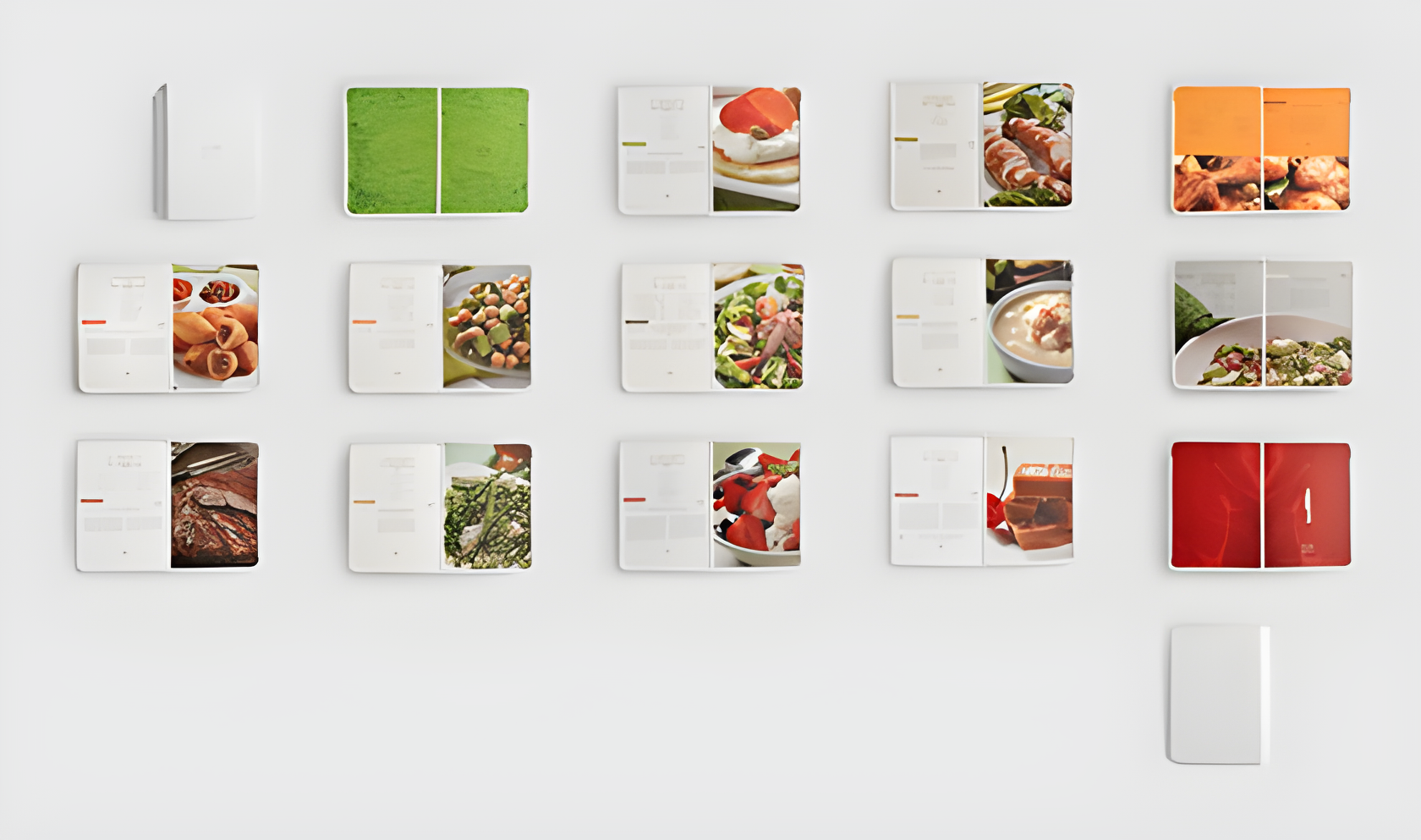
The project was originally conceived as a teaching aid for culinary students at Escuela de Cocina Carulla. Ogilvy & Mather Bogotá didn’t want another glossy recipe book — they wanted a sensory challenge. Each page contained dotted outlines to be cut along. Once sliced, it revealed the next stage of the recipe: ingredients on one side, visuals on the other.
Students learned that mastery isn’t just about knowing recipes — it’s about respecting tools. In an age of touchscreen scrolling, the act of physically cutting through knowledge restored a sense of presence. The feedback wasn’t visual — it was tactile. That’s powerful design thinking disguised as kitchen fun.
What fascinates me most about “Chop a Book” is how it shifts the idea of what a “book” is. It’s no longer a finished product; it’s a performance. You complete it with your own actions. Designers often talk about “user experience,” but here the “user” becomes a literal participant. The object doesn’t just teach — it responds.
Every cut changes the form of the book. It loses its perfection and gains its purpose. That’s the paradox of design: sometimes, destruction is part of creation. By the time you reach the last page, the book isn’t what it was — and neither are you.
In 2025, when AI recipes write themselves and AR overlays teach cooking in real time, “Chop a Book” feels almost rebellious. It refuses convenience. It demands attention. The world is full of interfaces — but almost none ask you to *feel* something real. This project does.
That’s why it resonates so deeply now. People are craving texture, slowness, friction. The analog isn’t dead; it’s redefining intimacy. And maybe that’s the hidden message of this design: that learning, like cooking, is something you do with your hands, not your feed.
What if print design learned from this? Imagine books that reveal textures, patterns, scents — not through technology, but through craft. Imagine architecture manuals that ask you to fold, cut, and assemble. Or fashion lookbooks that come with fabric samples you physically manipulate.
“Chop a Book” was ahead of its time. It predicted a world where the line between reading and doing dissolves. In that sense, it’s not just a cookbook — it’s a prototype for a new kind of learning, one that reclaims our hands from the touchscreen.
Cutting a book sounds violent, but here it becomes meditative. It’s an invitation to engage with knowledge differently — to risk imperfection for the sake of understanding. When I first saw this project, I thought of it as a reminder: design is not about preserving beauty, it’s about releasing it.
True design is not afraid of being ruined by use — it’s completed by it.
And maybe that’s what every designer secretly wants — not to make untouchable objects, but to create something that lives, changes, and even gets a little messy in the process.