18
Feb
25
Architecture in 2025 is a strange mix of imagination, engineering, and environmental responsibility. Designers are no longer content with simple structures; they want buildings to tell stories, function sustainably, and push human creativity. From floating mega-cities to vertical farms, the future is ambitious, audacious, and at times, delightfully absurd. What fascinates me most as a designer is how these concepts blend technology, ecological awareness, and the human experience into spaces that feel alive.

Even when some projects remain on paper, they influence real-world architecture. They challenge designers to think beyond conventional constraints, explore new materials, and rethink how humans inhabit space. Observing these projects is like peeking into a parallel world where cities float, towers rotate, and buildings farm their own food.
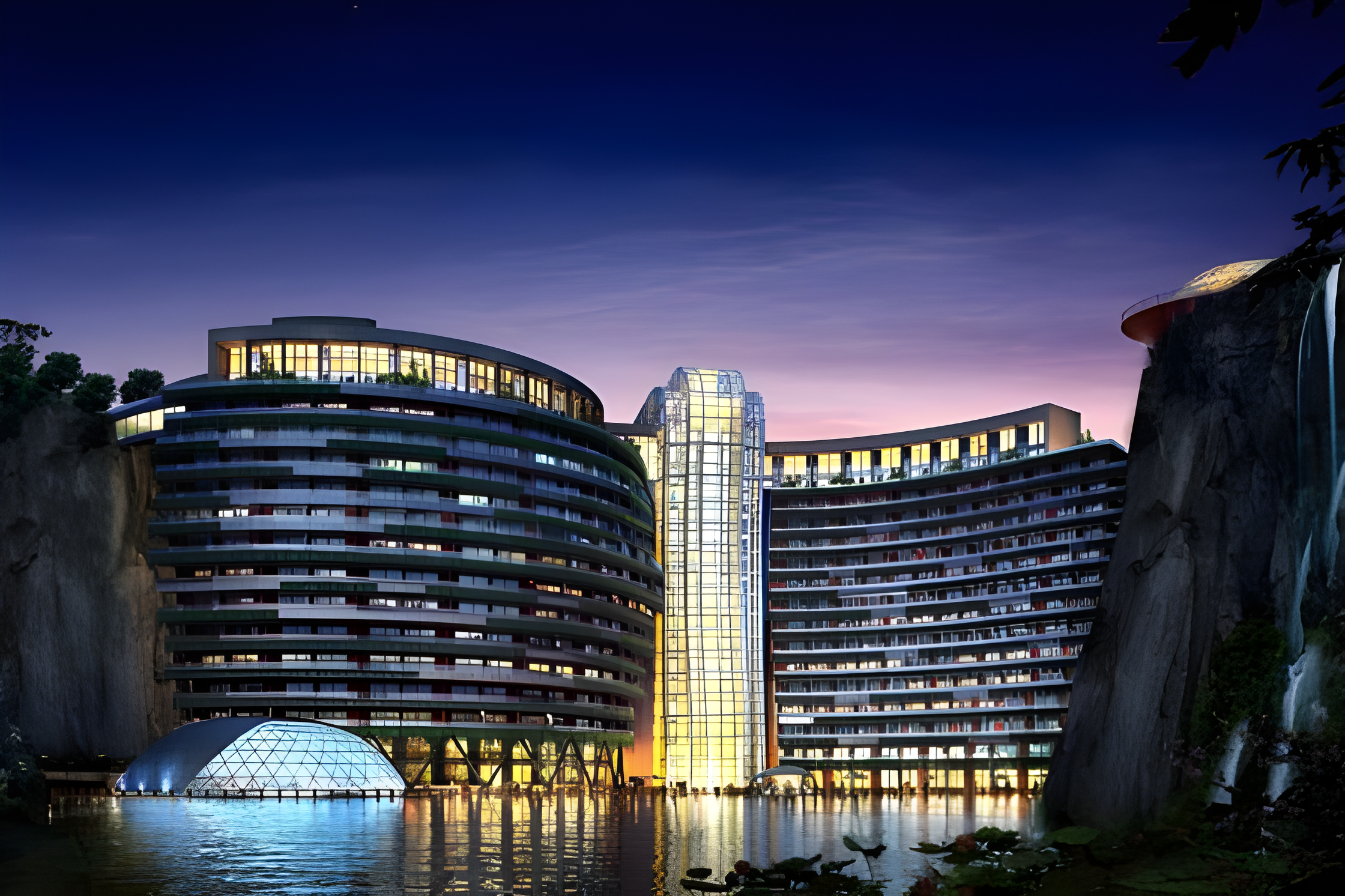
The Songjiang Hotel by Atkins Designs is a marvel of conceptual thinking. Positioned in a water-filled quarry outside Shanghai, it integrates a green roof, geothermal energy, and an underwater restaurant with guest rooms. Beyond the aesthetic appeal, its design tackles sustainability, efficient energy use, and experiential immersion. From my perspective, it’s one of those projects where each floor and each structural element communicates intent, merging environmental technology with sheer visual storytelling.


As a designer, I appreciate how the underwater spaces contrast with lush roof gardens. This juxtaposition is a lesson in balancing sensory experiences: light, sound, and spatial narrative coexist. It reminds me that architecture isn’t just shelter; it’s a multi-sensory dialogue between human and environment.
Vincent Callebaut’s LilyPad Island imagines a floating, self-sustaining city for 50,000 inhabitants. Lakes, mountains, solar panels, wind tunnels, and wave energy systems make it independent and eco-friendly. The concept pushes the boundary of urbanism and sustainability, challenging traditional notions of city planning. Personally, I find floating cities fascinating because they redefine what “home” can mean, literally unmooring human habitation from the land.


The scale of LilyPad demands thinking in systems: energy, water, waste, and human movement. Designers like Callebaut teach us to think holistically, considering every input and output of a structure as part of a living organism. As someone fascinated by both aesthetics and function, this is a playground for ideas.
The Dragonfly, another Vincent Callebaut concept, turns vertical architecture into a metabolic farm. Inspired by insect wings, it merges urban living, agriculture, and energy production. The 132nd floor hosts farming facilities powered by solar and wind energy. This integration of food production and habitation fascinates me: it’s both poetic and pragmatic.


Dragonfly is a template for solving urban problems — population density, energy use, and food supply — through design. Observing this, I think about how small-scale interventions in furniture or interiors can mirror the same philosophy: efficient, intelligent, and elegant solutions that respect human needs and environmental impact.
The Venus Project envisions circular cities, floating habitats, and integrated farms to combat population growth and climate change. It’s audacious, but the logic is compelling: rethinking spatial distribution, transport, and resource management on a planetary scale. What I find intriguing is the project’s insistence that design isn’t neutral — it shapes behavior, society, and environmental outcomes.

From a designer’s perspective, this is architecture as social engineering. It’s a bold reminder that future structures aren’t just containers; they are frameworks for sustainable, equitable living.
David Fisher’s rotating towers allow residents to enjoy sunrise and sunset from the same apartment. Each 80-story floor rotates individually, powered by a self-sufficient energy system. The concept combines luxury with dynamic experience and environmental consideration. I find the idea of “living architecture” compelling: spaces that move, respond, and adapt to occupants’ rhythms are the next frontier in experiential design.


These towers teach that architecture can be interactive and playful without losing utility or elegance. For me, it’s an affirmation that clever design marries engineering, aesthetics, and human delight.
Eric Vergne’s skyscraper farm merges housing, markets, and agriculture into a vertical ecosystem. Inspired by insect nests, it addresses food security and urban density. The biomorphic structure exemplifies how architecture can solve practical problems while producing sculptural beauty. From a design standpoint, it’s thrilling to see functional needs dictate form in ways that are simultaneously imaginative and purposeful.

Such vertical farms highlight a critical trend: the merging of ecological responsibility and urban planning. It’s a call for designers to consider resilience and sustainability as intrinsic to beauty.
These architectural visions, from floating cities to rotating towers, share a common thread: bold imagination tempered by functional intelligence. They show how design can solve problems, delight the senses, and push society forward. For me, observing these projects reinforces a principle I carry into every design: innovation isn’t just about novelty, it’s about meaningful impact. In architecture, as in interiors or furniture, this mindset distinguishes the ordinary from the extraordinary.