12
Mar
24
Super yachts have evolved far beyond mere vessels for transportation. They are floating statements of lifestyle, technology, and design. Watching enthusiasts and designers reveal new concepts at yacht shows is like peeking into an alternate world where imagination meets engineering. These designs often surpass practical expectations, combining luxury, utility, and sheer spectacle. For someone fascinated by how design shapes human experience, super yachts are a compelling case study: every detail communicates status, intention, and personality.
Even models that never reach production are important. They push boundaries, challenge conventions, and inspire other designers. The scale of these projects — both physical and conceptual — forces reflection on what luxury and function mean in a marine environment. Unlike traditional architecture or interior design, yachts are constrained by water dynamics, weight distribution, and energy efficiency, making innovation both necessary and visually fascinating.
Project Magnitude, based on the Y700 Oceanco Series, is a 90-meter superyacht concept designed by Lukasz Opalinski and John Henson. It merges intelligent design with functional innovation, offering a helipad, water sports deck, and facilities for morning jogs or launching jet-skis and submarines. What fascinates me most is how the designers integrate luxury with usability: every space has a purpose, yet the experience feels seamless.


From a designer’s perspective, Project Magnitude demonstrates the elegance of balancing form and function. Every deck, hull curve, and material choice serves both an aesthetic and practical role. Observing this makes me think about parallels in furniture or interior design — small details profoundly influence overall experience, even in massive structures like a yacht.
The Tropical Island Paradise by Yacht Island Designs brings an entire tropical ecosystem aboard. With propellers, the floating island can move while maintaining its lush environment. Upper decks feature beaches, cabanas, bars, and waterfalls cascading from a volcanic mountain. Swimming pools, outdoor dining, and tropical flora create an immersive experience that feels both surreal and incredibly thoughtful.


What stands out in this design is the blending of nature with human-engineered luxury. From a design viewpoint, it’s a playful yet sophisticated exercise in spatial planning and experiential design. Seeing such creativity inspires reflection on how even unconventional spaces — floating jungles, in this case — can embody principles of harmony, flow, and storytelling.
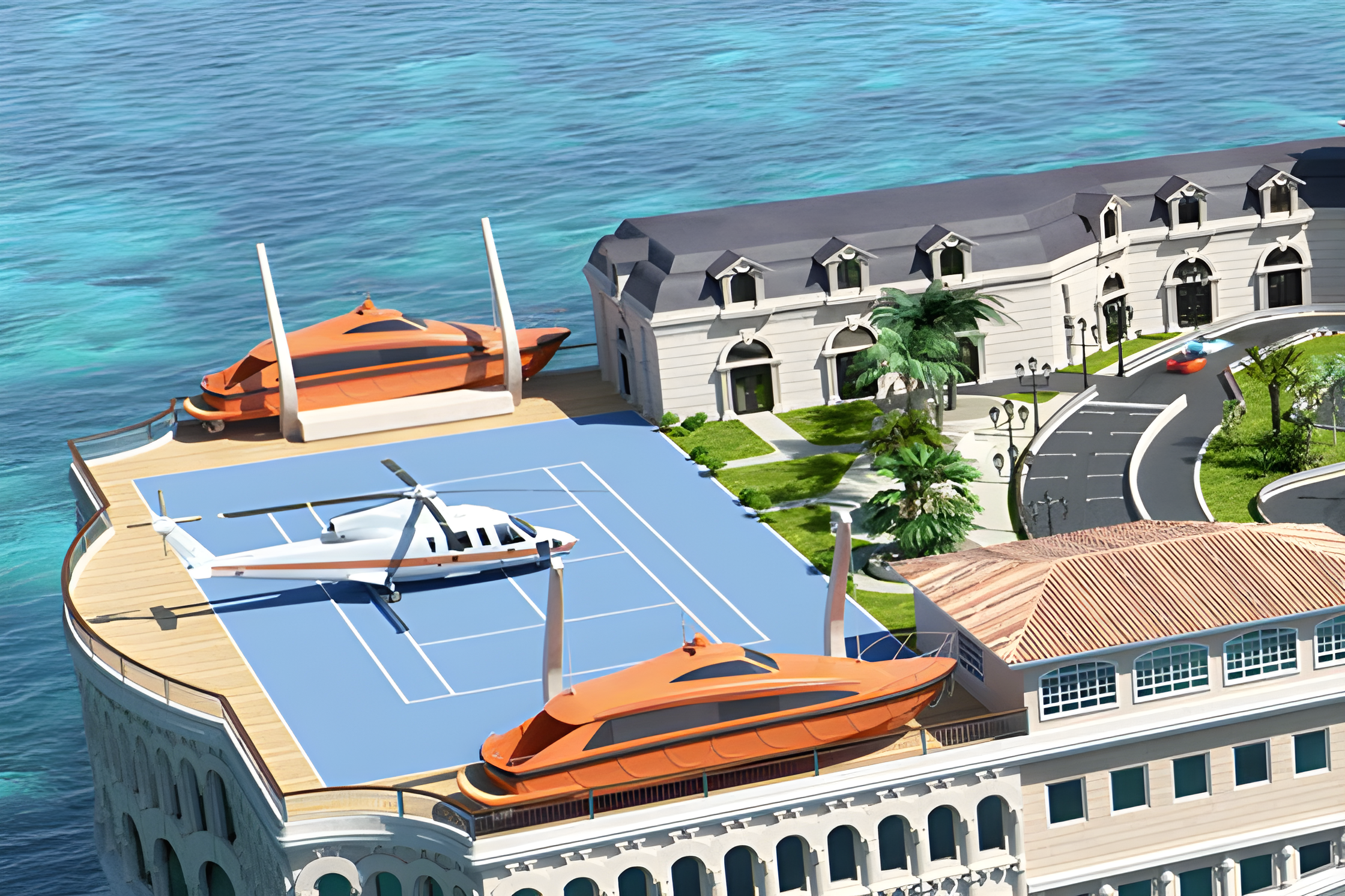
The Streets of Monaco yacht concept replicates the famous Grand Prix circuit and key city landmarks. Helipads, mini-submarines, speedboats, swimming pools, and Jacuzzis create an ultra-luxurious playground. The yacht functions as a self-contained miniature city, complete with recognizable architecture, blending simulation and leisure in a visually striking package.


From my standpoint, this concept illustrates how narrative and environment coalesce in design. It’s not just about luxury; it’s about crafting a story and engaging the passenger’s imagination. The replication of Monaco’s landmarks adds layers of meaning and playfulness, demonstrating that spatial design can communicate culture, history, and experience even on water.
The Ikkar is a 150-meter hybrid yacht that adapts its shape according to location and passenger comfort. Designed by Julien Anglade, it accommodates 50 guests and 60 crew members. The hull expands at the waterline when anchored, creating vast entertainment areas, then contracts at cruising speed. Equipped with solar sails, it combines luxury with eco-conscious design.


This concept fascinates me because of the intelligent adaptation of form. The Ikkar illustrates a key principle: design isn’t static; it evolves with context. Observing such projects reminds me of adaptive furniture or modular interiors — flexibility and responsiveness can redefine user experience and operational efficiency.
The Yelken Octuri flying yacht transforms into a plane by lowering its four masts into wings, flying up to 600 km. Built for corporate princes of Masqat Airways, this hybrid vessel embodies extreme multifunctionality. The challenge of making a structure simultaneously seaworthy and airborne pushes design, engineering, and materials to the absolute limit.


From a designer’s lens, the Flying Yacht exemplifies the intersection of creativity, practicality, and audacity. It challenges conventional notions of what a yacht can be, much like avant-garde furniture or architectural experiments push their own mediums. It’s a reminder that vision often precedes feasibility, and bold design inspires progress.
Looking ahead, super yachts will continue integrating sustainability, technology, and immersive experiences. Solar sails, modular interiors, AI-assisted navigation, and multi-purpose spaces signal a future where luxury and environmental responsibility coexist. For designers, these projects offer endless lessons in innovation, spatial storytelling, and human-centered engineering.
Ultimately, super yachts are living examples of design thinking at a massive scale. They demonstrate how narrative, experience, and function intersect, showing that even floating luxury can embody principles of thoughtful, intelligent design.