22
Nov
25
Few things feel more authentically American than a barbecue restaurant that embraces the warmth of a farmhouse or ranch. The goal is to evoke comfort and familiarity, combining the smell of smoked meats with interiors that make guests feel at home. The essence of a cozy barbecue spot isn’t just in the menu—it’s in the texture of the seating, the patina of reclaimed wood, and the subtle imperfections that signal authenticity. The charm lies in blending rustic aesthetics with functional spaces where families and friends can gather without pretension.
Take, for example, a midwestern barbecue restaurant in Kansas. The owners repurposed old barn wood for the floors and walls, installed industrial-style lighting with soft warm bulbs, and added mismatched chairs around communal tables. This combination of elements instantly communicates familiarity and relaxation. The environment encourages casual interactions and a sense of belonging, which is exactly what patrons expect when they think of a homey barbecue experience. In 2025, restaurants embracing this authentic rustic approach see higher customer satisfaction due to the tactile and visual storytelling embedded in their interiors.
Seating is more than functionality—it sets the tone for the entire dining experience. Wooden benches and long communal tables reflect traditional picnic and ranch settings, while upholstered chairs in brown leather or faux cowhide bring a touch of luxury without sacrificing rustic charm. Mixing different wooden chairs around a table—a trend borrowed from farmhouse design—adds playful originality and a sense of informal hospitality. The goal is to make guests linger, enjoying both their food and the surrounding atmosphere.

For instance, a restaurant in Texas experimented with a combination of traditional wooden booths and leather bar stools, resulting in varied seating that caters to both intimate gatherings and larger family groups. Strategic placement of tables and benches ensures guests feel part of a larger, convivial space. Comfort is paramount: padded seating or slightly worn leather mimics the feeling of a welcoming backyard barbecue, reinforcing the cozy, casual ambiance that keeps patrons returning.
Colors and patterns contribute heavily to the farmhouse barbecue aesthetic. Red-and-white gingham tablecloths, either on tables or incorporated into cafe-style window curtains, evoke nostalgia and warmth. Tableware should maintain a rustic feel: mason jar glasses with handles, enamel trays, handmade ceramic plates, or wooden serving boards enhance the authenticity of the dining experience. Even minor details, such as storing cutlery in tin cans or wooden baskets, support a relaxed and approachable atmosphere.
Consider a North Carolina barbecue spot that layers enamel plates with hand-thrown bowls, all on aged wooden tables. This combination allows each dish to feel part of a lived-in, personal narrative. The visual appeal of rustic tableware reinforces the comfort of the space and complements the tactile nature of reclaimed wood and leather seating. Through thoughtful use of color, pattern, and material, even casual diners feel immersed in a story-rich, home-like environment.
Using reclaimed and salvaged materials reduces costs, supports sustainability, and adds character to interiors. Wooden floors and walls constructed from barn wood, pallets, or aged planks create a tactile, story-rich backdrop. Brick tiles can simulate the flooring of traditional farmhouses, imparting timeless rustic charm. Even old shutters, used as window frames or wall accents, bring texture and historical depth to a space.

Restaurants in the American South increasingly incorporate industrial salvage—like corrugated steel panels under the bar, tractor seats for bar stools, or antique milk cans in corners. Each element conveys a sense of place and heritage, making diners feel as though they’re stepping into a genuine rural experience. Beyond aesthetics, these materials allow flexibility: walls and floors can be painted, distressed, or left natural, providing versatility in design while maintaining warmth and authenticity.
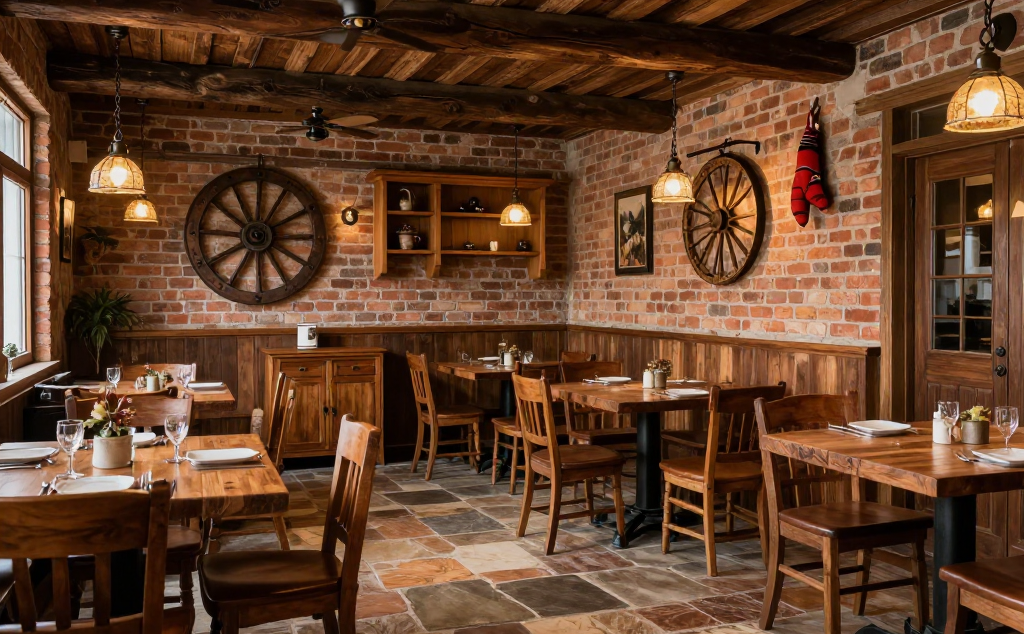
Accents define character. Leather-wrapped bull horns, vintage wagon wheel chandeliers, old farm tools, iron gears, wooden signs, and rustic animal figurines all contribute to a coherent narrative of rural life. Items salvaged from farms or antique markets enrich the space with authenticity and nostalgia, turning corners and walls into storytelling canvases. Even decorative arrangements of hay bales or vintage crates can serve functional purposes while reinforcing theme.
In practical terms, a restaurant may feature cast iron stars on walls, antique saddles repurposed as bar seating, or corral panels framing dining sections. Each piece not only decorates but sparks conversation, making the interior interactive. By carefully curating these items, owners create immersive experiences that resonate with guests’ collective memory of rural American life.
Lighting completes the ambiance. Barn-style pendant lights with metal shades, wagon wheel chandeliers, wrought iron sconces, and vintage oil lamps provide both functionality and stylistic cohesion. For accent lighting, miniature oil lamps or small Edison bulbs along table edges create warmth without glare. Avoid overly polished or chromed fixtures, which clash with the rustic aesthetic.

Consider a Kansas City barbecue restaurant that suspended a series of antique wagon wheel chandeliers above communal tables. The soft, diffused light highlighted reclaimed wood textures and emphasized earthy color palettes. By layering overhead, accent, and decorative lighting, the space feels alive and inviting, enhancing both culinary enjoyment and the cozy, approachable atmosphere essential to a successful barbecue venue.
Despite enthusiasm for rustic charm, mistakes can undermine authenticity. Avoid overly refined or modern furniture that feels out of place. Thick, formal tablecloths can make the space feel stiff, while bright chromed lighting fixtures distract from rustic storytelling. The objective is to maintain continuity: every element, from seating to decor, should evoke casual, farmhouse comfort. Even lighting should blend seamlessly, supporting warmth without artificial harshness.
Another frequent misstep is clutter. While rustic elements are key, overloading a space with too many salvaged items can overwhelm guests. Instead, curate accents thoughtfully, balancing decorative objects with functional surfaces. By respecting these guidelines, designers create spaces that feel cozy, engaging, and genuinely reminiscent of farm-to-table barbecues, ensuring that diners enjoy both the food and the immersive environment.