08
Oct
24
Every December feels like a soft echo — the year shrinking into a few memories that survived the noise. We scroll through photos, receipts, playlists, maybe an overexposed set of beach pictures, and yet, that’s not what really defined our year. It’s usually the quieter moments — the conversation that made sense of something, the small risk that didn’t kill us, the project that never got finished but changed the way we think.
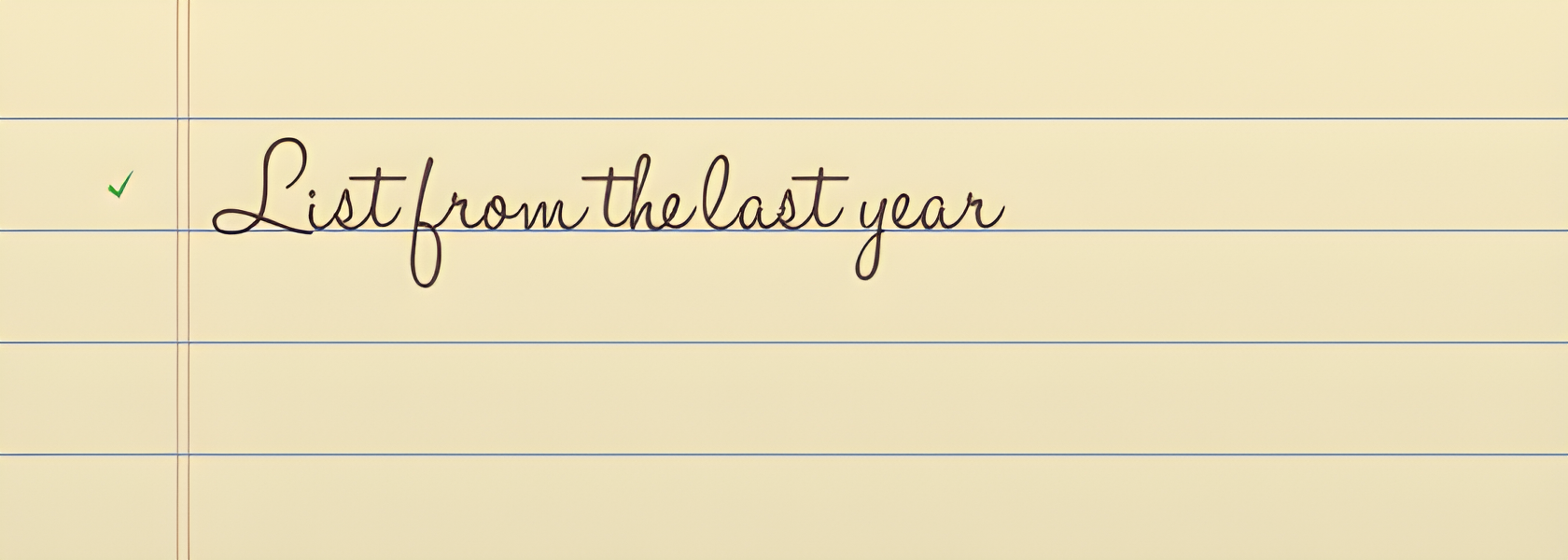
As a designer, I’ve learned that reflection isn’t nostalgia. It’s editing. We can’t design forward without reviewing the drafts of our past. So each January, before rushing into new goals, I make what I call my “last year list.” Not a brag sheet, not a to-do summary — just a list of what *stuck*.
Social media tricked us into believing that highlights equal happiness. The algorithm doesn’t reward introspection; it rewards spectacle. So, when people make their “year in review,” it often looks like a travel ad — vacations, gadgets, smiles at the right aperture. But the real list is private. It doesn’t sparkle, it stings. It contains the tough conversations, the losses that taught patience, the things we let go of gracefully.
In design, not every sketch makes it to production — and that’s okay. Life works the same way. The idea isn’t to have a flawless timeline, but to understand which moments were prototypes and which were finished pieces.
Try this: list twelve things from the last year that actually mattered to you. Not things you bought, not viral moments, but real events that changed your direction — even slightly. Maybe you learned to say no to a client. Maybe you finally asked for help. Maybe you spent time alone and realized it wasn’t loneliness.
When I did this last year, my list included learning to enjoy silence, starting a side project that went nowhere but cleared my mind, and moving my workspace near a window. None of these made my Instagram, but each one changed the way I see my work. That’s the point.
Once you have your twelve, cross out half. Seriously. Keep only six. It hurts — but so does every good edit. The purpose isn’t minimalism for its own sake; it’s focus. When I cut my own list down, I noticed a pattern: most of what I kept involved creating, not consuming. Conversations, not achievements. That realization shaped how I approached this year’s projects — fewer, deeper, more intentional.
Editing your life list is like editing a design file — the more layers you hide, the more the core message appears.
Your list is basically a mirror. If it’s filled with external stuff — new gear, new cities, new job titles — maybe you’re living in broadcast mode. If it’s full of small shifts, quiet wins, things you never posted — you’re probably closer to designing your own rhythm.
When I looked at mine from last year, I realized that half my joy came from things that never paid bills. Sketching for no reason. Fixing an old chair. Writing letters. It’s humbling to notice how unprofitable meaning often is. But that’s also what makes it real.
We designers love frameworks, so here’s one: treat your new year as a redesign brief. What worked stays, what failed gets reimagined, and what never existed deserves a prototype. Don’t make resolutions — make experiments.
For me, 2025 is about smaller circles, slower work, and fewer open tabs. Less “new year, new me,” more “same me, better focus.” Your version will look different, and that’s how it should be. Because your list — from the last year or the next — is supposed to sound like you, not like a trend.